
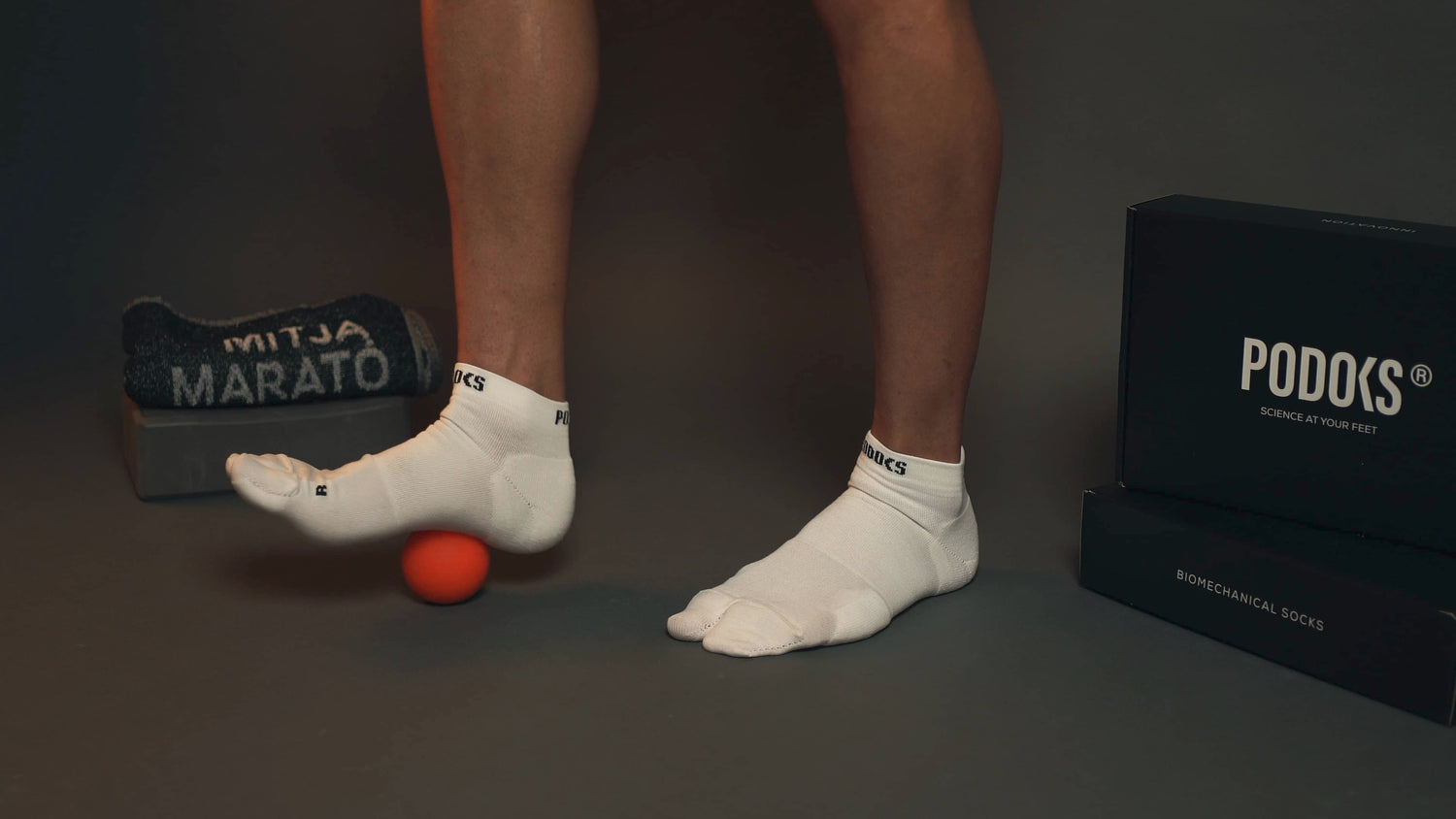
Plantar fasciitis is a very common injury characterized by pain and inflammation in the plantar fascia, the fibrous tissue that connects the heel to the base of the toes. [1]
Scientific Note | A study from the University of Valencia found that a specific exercise program reduced pain by up to 60% in patients with chronic plantar fasciitis after 8 weeks of consistent practice.
1. Basic plantar fascia stretches
Stretching is essential to decrease stiffness and reduce pain: [2]
- Towel Fascia Stretch : Sitting with your leg extended, wrap a towel around the sole of your foot and gently pull it toward you for 15-20 seconds.
- Self-massage with a ball : Move a tennis ball or massage ball under the sole of your foot with slow movements, applying light pressure.
Fun Fact | According to the Spanish Society of General and Family Physicians (SEMG), spending 5 minutes a day stretching the plantar fascia improves local circulation and speeds recovery.
2. Strengthening the foot and calf muscles
Strengthening the muscles that support the arch of the foot relieves tension on the fascia and prevents relapses. Some recommended exercises include: [3]
- Calf raises : Standing, raise your heels and hold for 2-3 seconds before slowly lowering them. Repeat 10-12 times.
- Finger Pick-Up : Place marbles or a small towel on the floor and try to pick them up or crumple them with your toes.
Scientific Note | A clinical trial published in The Journal of Foot and Ankle Research concludes that a combination of stretching and strengthening reduces symptoms by 40% within 4-6 weeks.
3. Proprioception and balance exercises
Proprioception exercises work on ankle coordination and stability, which results in less tension on the plantar fascia: [4]
- One-Leg Balance : Hold the position on one foot for 30 seconds; when you feel comfortable, try it with your eyes closed or on a padded surface.
- Working on different surfaces : Hiking in the mountains or on unstable surfaces can help you strengthen and develop the muscles responsible for stabilizing your joints.
Curiosity | Research from the University of Barcelona shows that proprioception exercises improve the foot's adaptation to different surfaces and reduce the risk of relapse.
4. Daily application routine
To obtain optimal results, it is key to perform these exercises regularly and progressively: [5]
- Warm up with gentle ankle movements and brisk walking (2-3 minutes).
- Perform stretches for the plantar fascia and Achilles tendon.
- Strengthen with heel raises and object pick-up exercises.
- Progress to proprioception exercises once the pain has decreased.
Scientific note | The Spanish Physiotherapy Association recommends a minimum frequency of 3-4 sessions per week, supervised by a professional in cases of severe pain.
5. Final conclusions and recommendations
A combination of stretching, strengthening exercises, and proprioception forms the basis of effective treatment for plantar fasciitis. It is also essential to wear appropriate footwear , control your body weight , and, if you have any questions or symptoms persist, consult a professional (physiotherapist, podiatrist, or sports medicine physician) for a personalized diagnosis and follow-up. [6]
Curiosity | Recent studies in the Ibero-American Journal of Physiotherapy and Kinesiology highlight that including relaxation techniques (yoga or Pilates) can speed recovery by improving the flexibility of the entire posterior muscle chain.
References (in order of appearance)
- Ortuño, J. & Calvo, P. (2020). Etiology of plantar fasciitis and treatment strategies. Journal of Clinical Podiatry, 12(1), 34-42.
- Spanish Society of General and Family Physicians (SEMG). (2021). Guide to therapeutic exercises for musculoskeletal disorders.
- The Journal of Foot and Ankle Research. (2019). Plantar Fasciitis Intervention: Stretching and Strengthening Outcomes.
- University of Barcelona. (2020). Study on proprioception and stability in plantar fasciitis.
- Spanish Association of Physiotherapy. (2021). Recommendations for the rehabilitation of foot injuries.
- Ibero-American Journal of Physiotherapy and Kinesiology. (2021). Analysis of the effectiveness of yoga and Pilates in foot injuries.
Remember: consistency in practicing these exercises is essential to see significant improvements. An early diagnosis and proper treatment often shorten recovery times and minimize the risk of plantar fasciitis becoming chronic.
To learn more, we recommend reading our Complete Guide to Plantar Fasciitis .




Leave a comment
All comments are moderated before being published.
This site is protected by hCaptcha and the hCaptcha Privacy Policy and Terms of Service apply.