
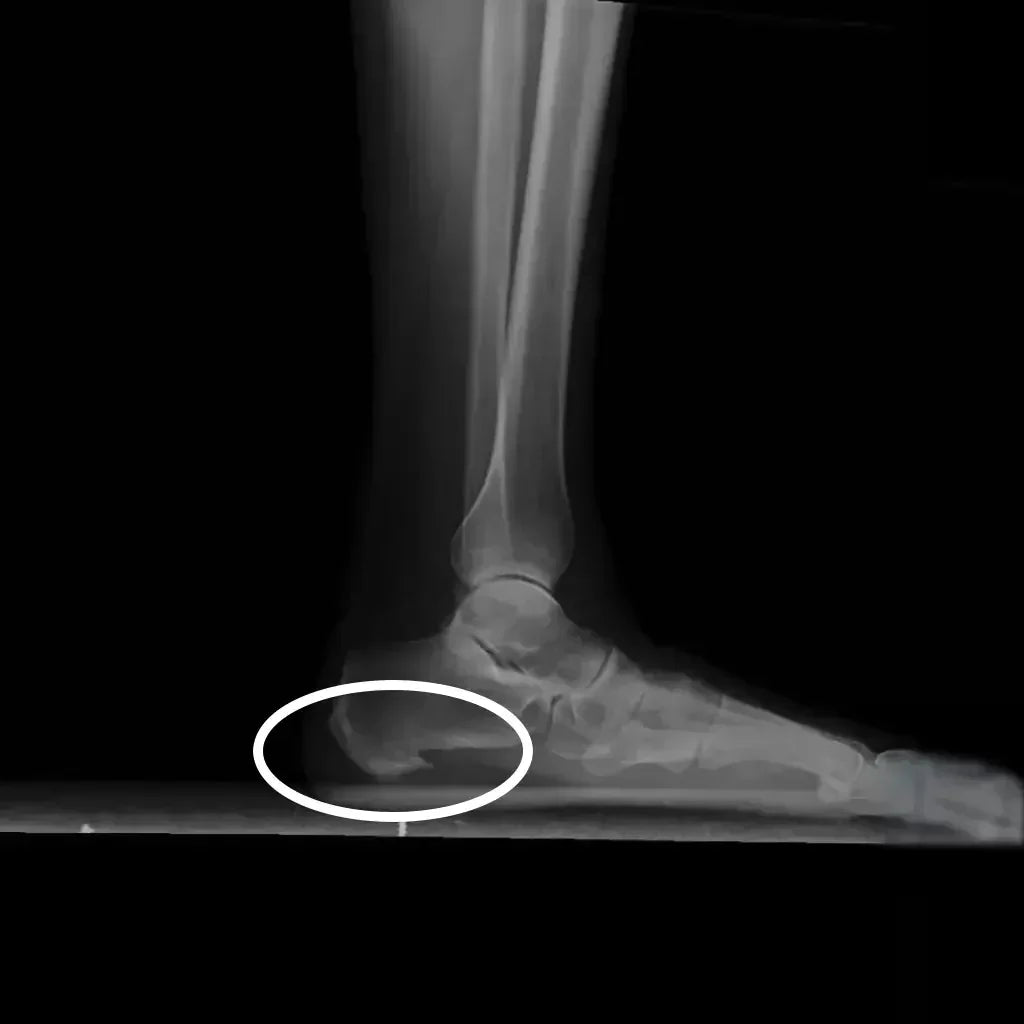
What is a heel spur?
A heel spur is a bony growth that forms on the heel bone (calcaneus) due to a buildup of calcium deposits at the insertion point of the plantar fascia. This condition can cause severe pain and may be related to plantar fasciitis , an inflammation of the fascia that lines the sole of the foot.
Causes of heel spurs
Heel spurs usually develop due to biomechanical and mechanical factors that overload the plantar fascia and heel, including:
- Use of inappropriate footwear: especially those with little cushioning or excessively flat.
- Overweight or obesity: Excess weight increases pressure on the heel.
- Intense physical activity: impact sports such as running or jumping can promote its appearance.
- Biomechanical alterations: flat or hollow feet can generate greater stress on the plantar fascia.
- Aging: With age, the plantar fascia loses elasticity, increasing the risk of microinjuries.
- Prolonged standing: People who remain standing for long periods may develop this condition.

Symptoms of heel spurs
Heel spurs may be asymptomatic in some cases, but when they do cause symptoms, the most common are:
- Sharp pain in the heel , especially when taking the first steps in the morning.
- Pain that worsens after prolonged periods of rest.
- Burning or swollen sensation at the bottom of the heel.
- Discomfort when walking barefoot on hard surfaces.
Treatments for heel spurs
Heel spur treatment aims to reduce inflammation, relieve pain, and improve foot biomechanics. Some of the most effective options include:
1. Use of orthopedic insoles and biomechanical socks
Custom insoles help distribute pressure better across the foot, reducing tension in the plantar fascia. Additionally, biomechanical socks like Podoks have been shown to reduce plantar pressure by 25% on the first metatarsal and 23% on the big toe, activating the Windlass mechanism to improve stability and relieve pain.
2. Appropriate footwear
It is recommended to wear shoes with good arch support , heel cushioning and a drop of between 10-12 mm to improve the biomechanics of the foot.
3. Physical therapies and physiotherapy
Treatments such as shock waves, ultrasound, electrotherapy, and stretching exercises have been shown to be effective in improving symptoms.
4. Medication and medical treatments
Prescription anti-inflammatory drugs can help in acute cases. In some cases, ultrasound-guided injections of corticosteroids or platelet-rich plasma may be performed.
5. Surgery (in severe cases)
It is only considered in cases where conservative treatments have not been successful. Surgery aims to release the plantar fascia and remove the spur if necessary.
Heel spur prevention
To prevent the appearance of heel spurs, it is essential to follow these recommendations:
- Maintain an appropriate weight to reduce stress on the heel.
- Wear appropriate footwear with cushioning and support.
- Perform daily stretches of the plantar fascia and Achilles tendon.
- Avoid walking barefoot on hard surfaces.
- Use biomechanical socks like Podoks , which optimize your stride and reduce tension on the plantar fascia.
Conclusion
Heel spurs are a condition that can cause significant pain, but with proper treatment and preventative measures, it's possible to alleviate the symptoms and prevent their occurrence. Opting for innovative biomechanical solutions like Podoks socks can make a big difference to the health of your feet.




Leave a comment
All comments are moderated before being published.
This site is protected by hCaptcha and the hCaptcha Privacy Policy and Terms of Service apply.