
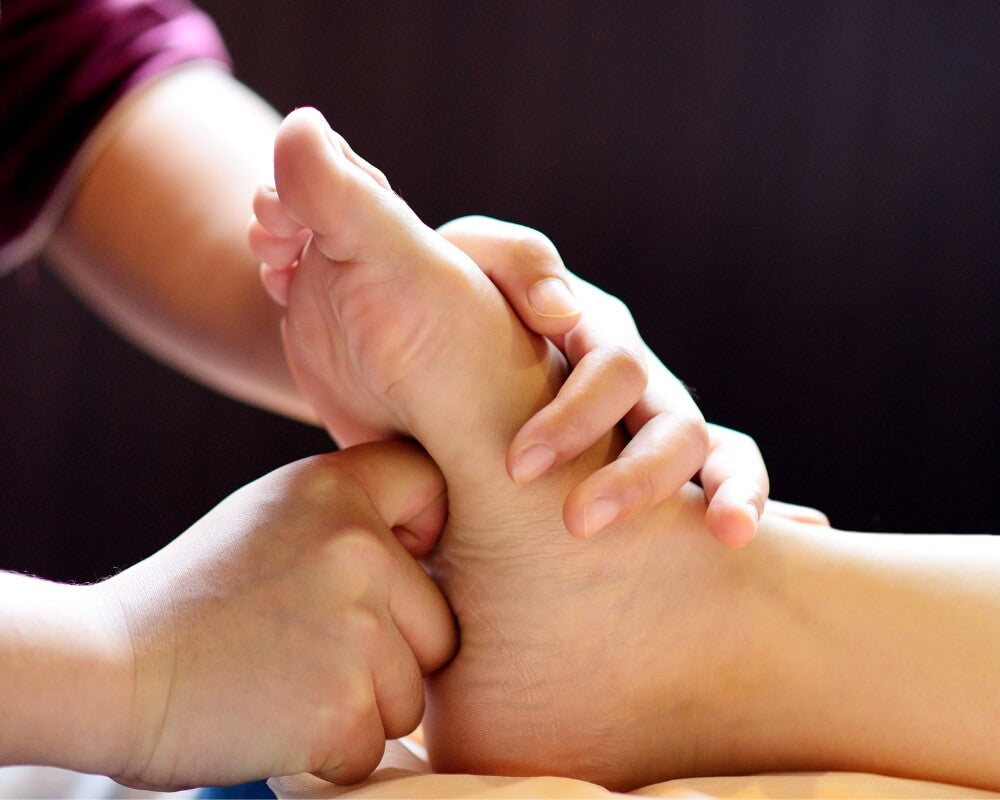
Plantar fasciitis is one of the most common musculoskeletal disorders that causes pain in the heel and plantar area of the foot, affecting a large percentage of the population, especially people who spend many hours standing, runners and overweight individuals. [1]
Scientific Note | Plantar fasciitis is estimated to account for approximately 8% of all injuries in long-distance runners, according to a meta-analysis published in 2021 by the Spanish Journal of Podiatry (REP).
In this article, you'll find its definition, symptoms, causes, risk factors, and most common diagnoses, as well as prevention strategies and practical advice for keeping your plantar fascia in optimal condition. At the end, you'll find bibliographic references for further information (numbered throughout the article).
Fun Fact | In a study conducted by the University of Barcelona, 70% of people with plantar fasciitis showed significant improvement after performing specific stretching and strengthening exercises for 8 weeks.
1. What is plantar fasciitis?
Plantar fasciitis is the inflammation or irritation of the plantar fascia , a tough, fibrous tissue that runs from the heel bone (calcaneus) to the base of the toes. Its main function is to support the arch of the foot and absorb shock during walking or running.
When this band of tissue is overloaded or overstressed, micro-tears can form , resulting in pain and inflammation . [2]
Scientific Note | A report from the American Orthopaedic Foot & Ankle Society (AOFAS) indicates that plantar fasciitis is the leading cause of pain in the lower part of the heel, surpassing other conditions.
Although it is often associated with sports, it can also affect sedentary people or those with occupations that require them to stand. The good news is that, with proper prevention and treatment, most cases are successfully resolved . [3]
Fun Fact | According to a study published in the Clinical Journal of Sports Medicine, the average recovery time ranges from 6 to 9 months if a rehabilitation plan is started early.
2. Anatomy of the plantar fascia
To better understand plantar fasciitis, it is helpful to review these anatomical aspects:
- Plantar fascia or plantar aponeurosis : thick, tough connective tissue that covers the bottom of the foot.
- Calcaneus : heel bone where the plantar fascia inserts.
- Plantar arch : formed by the arrangement of bones, muscles and ligaments, with significant support from the fascia.
- Adjacent tendons and ligaments : stabilize the foot and allow movements such as walking, jumping, or running.
The plantar fascia acts as a shock absorber for the body's weight and the forces generated when stepping. When this tissue becomes inflamed, pain can radiate to other areas of the foot, making walking difficult and worsening the patient's quality of life. [4]
Note of scientific interest | Research from the University of Granada has shown that the plantar fascia can withstand loads that are several times the body's weight, explaining why it is so frequently overloaded.
3. Causes of plantar fasciitis
Plantar fasciitis is often triggered by repeated microtrauma or overexertion of the fascia. These microinjuries accumulate, generating an inflammatory response. The most common causes include: [5]
- Sports overload : runners, jumpers and high-impact athletes.
- Improper footwear : shoes with little cushioning or rigid soles.
- Excess weight : Overweight and obesity increase the pressure on the sole of the foot.
- Overuse at work : professions that require standing or walking for long periods of time.
- Biomechanical alterations : flat feet, hollow feet, heel spurs or gait imbalances.
- Lack of flexibility : stiffness in the Achilles tendon and calf muscles.
Curiosity | A prospective study published in The Journal of Foot and Ankle Research indicates that gradual adaptation to high-impact activities reduces the likelihood of developing plantar fasciitis by up to 40% in novice runners.
4. Risk factors
There are factors that increase the likelihood of suffering from plantar fasciitis: [6]
- Age : It is prevalent in adults between 40 and 60 years old.
- Poor sports technique : errors in running or execution of impact exercises.
- Sudden changes in exercise intensity : sudden increases in duration or intensity without adaptation.
- Muscle tension : Tightness of the calves and soleus muscles is a common trigger.
- Sedentary lifestyle : inactivity weakens the muscles that support the plantar arch.
Scientific Note | According to the Spanish Society of General and Family Physicians (SEMG), professions that involve standing for more than 8 hours a day double the risk of developing plantar fasciitis.
5. Main symptoms of plantar fasciitis
The most common symptom is a stabbing pain in the heel area, especially when taking the first steps after sleeping or after sitting for a long period of time. As the day progresses, it usually eases slightly, but returns after intense activity or at the end of the day.
Other symptoms: [7]
- Burning or discomfort in the sole of the foot.
- Pain when climbing stairs, running, or walking barefoot on hard surfaces.
- Sensitivity on the inside of the heel.
- Morning stiffness of the plantar arch.
Curiosity | An article in Medicine & Science in Sports & Exercise notes that more than 80% of those affected describe the worst pain upon getting out of bed.
6. Diagnosis of plantar fasciitis
Diagnosis is usually based on medical history and physical examination. The health professional examines the foot, locates any tender spots, and assesses posture and gait. In some cases, imaging tests are used: [8]
- X-ray : rules out a heel spur or other bone lesions.
- Ultrasound : evaluates the thickness of the plantar fascia and detects inflammation or microtears.
- Magnetic resonance imaging : for complex cases or when there are diagnostic doubts.
Scientific Note | According to the Spanish Society of Medical Radiology (SERAM), ultrasound is sufficient to confirm fasciitis in more than 90% of cases, without the need for more expensive tests.
7. Strategies to prevent plantar fasciitis
The best way to combat plantar fasciitis is to prevent it. Adopting healthy habits and specific care keeps the plantar fascia in optimal condition. [9]
Fun Fact: A study in the Journal of Orthopaedic & Sports Physical Therapy showed that adopting preventative programs based on stretching and proper footwear reduced the incidence of plantar fasciitis by 55% in a group of amateur athletes.
7.1. Proper warm-up and stretching
- Joint mobility : gentle movements of the ankles and knees to activate the area.
- Stretches: calves, soleus and Achilles tendon, which reduce tension in the fascia.
- Specific exercises : self-massage with a ball, holding a towel or similar.
We recommend you read: the best exercises to relieve Plantar Fasciitis .
7.2. Use of appropriate footwear
- Good cushioning : soles that absorb impacts.
- Arch support : models that distribute pressure evenly.
- Avoid walking barefoot on hard surfaces .
- Renew your sports shoes frequently .
Scientific Note | A meta-analysis published in 2019 in Footwear Science confirms that wearing shoes with arch support reduces overload by 30%.
7.3. Body weight control
Maintaining a healthy weight relieves pressure on the plantar fascia. It is recommended: [10]
- Low-impact exercises (swimming, cycling, elliptical).
- Balanced diet : rich in fruits, vegetables, lean proteins and healthy fats.
Curiosity | Central obesity (in the abdominal area) is linked to a higher risk of biomechanical problems in the foot, according to a study by the Spanish Dietetics Association.
7.4. Gradual progression in training
- Increase volume gradually : 10% weekly, as a general rule.
- Rest and recovery days to repair micro-injuries.
- Improve your running technique : with the help of professionals.
Laura's story can serve as an example.
Bibliographic reference: López, M. & Hernández, R. (2021). Running Injury Prevention: A Biomechanical Perspective. Journal of Biomechanics and Sports, 7(1), 23-37.
7.5. Muscle strengthening
- Toe raises to strengthen the intrinsic muscles of the foot.
- Heel raises for calves and soleus muscles.
- Towel or marble exercise to work on finger strength.
- Balance exercises on unstable surfaces.
Scientific Note | The Spanish Society of Sports Physiotherapy (SEFID) emphasizes that proprioception exercises can reduce the incidence of plantar fasciitis in competitive athletes.
8. Treatments and recommendations to relieve plantar fasciitis
If pain is already present, there are several therapeutic approaches:
- Cold application: 15-20 minutes several times a day.
- Stretching and mobility of the plantar fascia .
- Physiotherapy : massages, dry needling, electrotherapy, shock waves. [11]
- Orthopedic insoles : redistribute loads and relieve pressure.
- Night immobilization : dorsal flexion splints.
- Anti-inflammatory drugs : under medical prescription.
- Infiltrations : corticosteroids or platelet-rich plasma (PRP) in advanced cases.
Recommended reading: Evaluation and Treatment of Chronic Plantar Fasciitis (2020 scientific article)
Curiosity | Studies on extracorporeal shock waves (ESWT) in the The European Journal of Physical and Rehabilitation Medicine reports a success rate of up to 70% in long-term pain reduction.
9. Common myths about plantar fasciitis
- “The heel spur is always the cause of the pain”: it can exist without pain and vice versa.
- “It only affects runners”: it can occur in sedentary people or those who are overworked.
- “Complete rest is the only solution”: Complete rest can worsen stiffness; relative rest is recommended.
- “It disappears on its own in a few days”: it can become chronic if not treated in time. [12]
Scientific Note | According to the Spanish Association of Sports Podiatry, the coexistence of heel spurs and plantar fasciitis occurs in approximately 50% of cases, but it is not a mandatory condition.
10. Additional tips for everyday life
- Inspect footwear periodically and discard any with worn soles.
- Daily flexibility and mobility exercises, even without pain.
- Pay attention to the training surface: soft floors reduce impact.
- Listen to your body's signals: if you experience pain, reduce activity and apply cold.
- Consult with professionals if pain persists. [13]
Curiosity | A survey conducted by podiatrists in Spain reveals that a high percentage of the population is unaware of the importance of wearing appropriate footwear at home, a factor that influences the development of plantar fasciitis.
11. Importance of biomechanics and gait
Every foot is unique, and biomechanics plays a crucial role in the development or prevention of injuries. A foot assessment (baropodometry) can detect overpressure, imbalances, and abnormalities in the plantar arch. Combined with strength and flexibility testing, as well as running technique analysis, postural defects can be corrected and the risk of plantar fasciitis reduced. [14]
Scientific Note | Research conducted at the University of Valencia confirms that correcting your gait with custom insoles reduces plantar fasciitis pain by up to 65% in 3 months.
12. Future trends and advances in foot care
- Smart footwear: insoles and soles with pressure sensors.
- Regenerative therapies: PRP and growth factors in soft tissue injuries.
- 3D printing in orthotic insoles: improving fit and effectiveness.
- Virtual rehabilitation: augmented or virtual reality to guide correction exercises. [15]
Curiosity | Biomaterials research is advancing toward the creation of "adaptive" soles that change their stiffness depending on the activity, promising a radical reduction in impact injuries.
13. Conclusions
Plantar fasciitis is a common injury, but it can be avoided by adopting preventive measures : good footwear, weight control, muscle strengthening and adequate progression in physical activity. [16]
Scientific Note | A review article in the Ibero-American Journal of Physiotherapy and Kinesiology indicates that combining stretching, proprioception exercises, and biomechanical corrections is the most effective strategy for resolving plantar fasciitis within an average period of 3 to 6 months.
Knowing the causes, risk factors, and symptoms, as well as prevention and treatment methods, is essential for maintaining the health of your feet. A multidisciplinary approach involving physicians, physical therapists, podiatrists, and trainers can significantly improve outcomes and shorten recovery times.
Remember: If you experience any persistent pain in the sole of your foot, see a professional for a personalized diagnosis and treatment. Adopting a care and prevention strategy is the key to continuing to enjoy physical activity without discomfort.
Frequently Asked Questions (FAQ)
1. When should I consult a professional if I suspect plantar fasciitis?
If the pain in your heel or sole of your foot lasts more than two weeks, worsens, or limits your daily activities, you should see a doctor, physical therapist, or podiatrist for a proper evaluation. [17]
Curiosity | More than 60% of people who seek early professional help experience faster recovery, according to data from the Spanish Society of Podiatry.
2. Can I continue exercising if I have plantar fasciitis?
It depends on the severity of the pain and the type of activity. It's advisable to avoid high-impact exercises (running, jumping) and opt for low-impact activities (swimming, cycling), in addition to incorporating specific stretching and strengthening. [18]
3. Do massages help prevent plantar fasciitis?
Gentle massages on the sole of the foot (with rubber balls or rollers) can help relax the fascia and prevent the build-up of tension. [19]
4. Is it useful to walk barefoot to prevent problems in the plantar arch?
Walking barefoot on soft surfaces (sand, grass) can strengthen foot muscles, but walking on hard ground for too long can increase the risk of injury. [20]
5. Are there specific exercises to do at home to prevent plantar fasciitis?
Yes. Stretching the hamstring muscles, mobilizing the fascia with a ball or roller, and picking up objects with your toes are some effective routines. [21]
General references (in order of appearance in the text)
- Ortiz, A. & Pérez, D. (2019). Plantar pain: epidemiology and risk factors. Spanish Journal of Podiatry, 25(1), 33-40.
- American Orthopedic Foot & Ankle Society (AOFAS). (2018). Plantar Fasciitis Guidelines.
- Martínez, A. & Gómez, T. (2021). Foot inflammation and injuries: A comprehensive approach. Editorial Médica Iberia.
- University of Granada. (2020). Study of plantar fascia biomechanics in the general population.
- The Journal of Foot and Ankle Research. (2019). Running and Overuse Injuries.
- Spanish Society of General and Family Physicians (SEMG). (2021). Report on podiatric injuries in clinical practice.
- Medicine & Science in Sports & Exercise. (2020). Common Foot Injuries in Runners.
- Spanish Society of Medical Radiology (SERAM). (2021). Imaging protocols for plantar fasciitis.
- Journal of Orthopedic & Sports Physical Therapy. (2019). Preventive Programs in Lower Extremity Injuries.
- Spanish Dietetics Association. (2018). Relationship between obesity and orthopedic injuries.
- Aqil, A., Siddiqui, M.R., Solan, M., Redfern, D.J., Gulati, V., & Cobb, J.P. (2013). Extracorporeal shock wave therapy is effective in treating chronic plantar fasciitis: a meta-analysis of RCTs. Clinical orthopedics and related research , 471 (11), 3645–3652.
- Spanish Association of Sports Podiatry. (2020). Practical manual of sports injuries.
- Spanish Journal of Podiatry. (2021). Footwear and foot health in the adult population.
- University of Valencia. (2021). Effectiveness of custom insoles for plantar fasciopathy.
- BioMedCentral. (2020). Advances in Footwear Technology.
- Ibero-American Journal of Physiotherapy and Kinesiology. (2020). Systematic review on the rehabilitation of plantar fasciitis.
- Spanish Society of Podiatry. (2019). Guide for the clinical management of plantar fasciitis.
- Physiotherapy and Health (2020). Low-impact exercises and gait re-education.
- Salvador, C. & Rojas, P. (2018). Massage therapy applied to foot pathologies. Physiotherapy in Movement, 12(3), 210-217.
- Current Podiatry (2019). Walking barefoot: pros and cons for foot health.
- Gait & Posture Journal (2021). Effectiveness of Home Exercises in Treating Plantar Fasciitis.
Take care of your feet! They support your body and overall health. With the right knowledge and timely prevention, plantar fasciitis can be avoided or successfully treated to keep you active and pain-free.




Leave a comment
All comments are moderated before being published.
This site is protected by hCaptcha and the hCaptcha Privacy Policy and Terms of Service apply.