
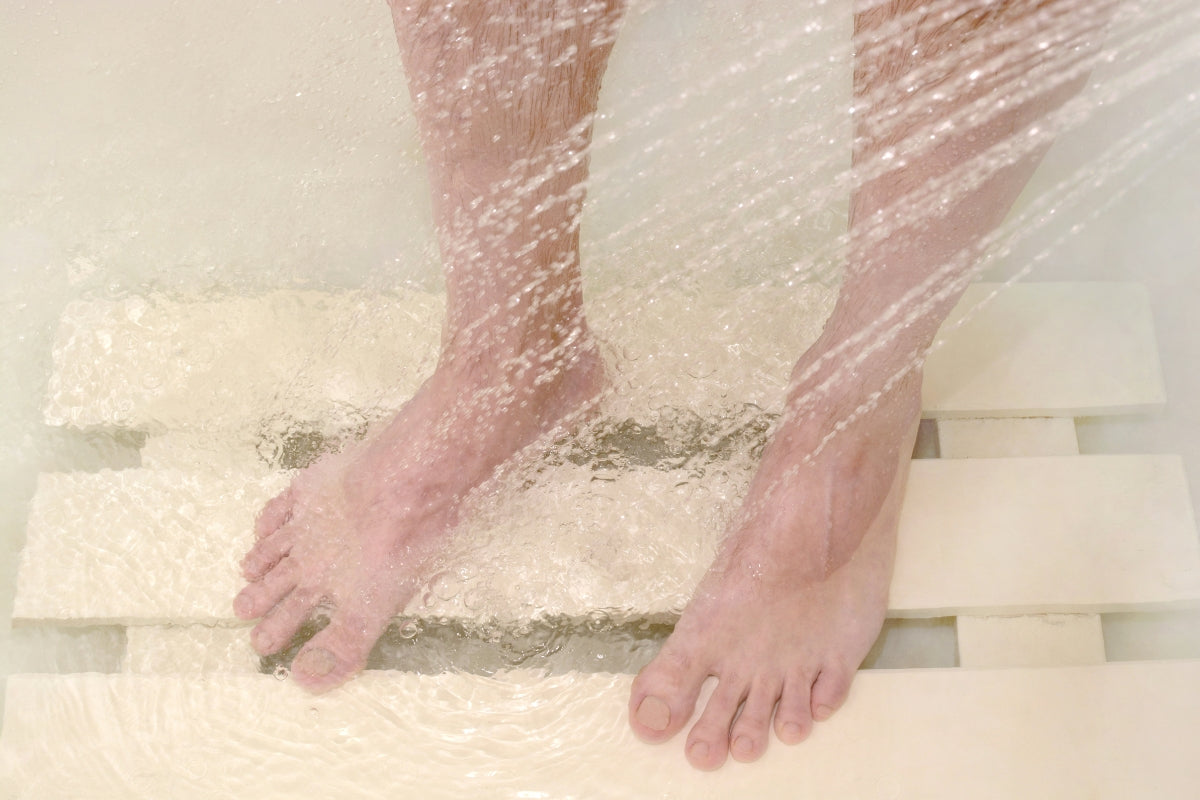
Do you know why swimming pools and locker rooms are one of the places where you can most easily contract foot fungus? During the summer months, when the heat is on and the desire to cool off increases, these spaces become the perfect setting for an unwanted encounter with these microorganisms.
Fungi, especially the dermatophytes responsible for athlete's foot, find ideal conditions for growth in swimming pools and locker rooms: constant humidity, warm temperatures, and a large concentration of barefoot people.
In fact, according to the epidemiological study on dermatophytosis in Spain, conducted in 2011, the average age of infected patients was 38.7 years, and 55.6% of them were men.
Why swimming pools are hotbeds of infection
The body is home to more than 100,000 fungi. Some of them are very useful and stable, while others, under certain conditions (such as heat and humidity), can multiply very quickly and cause infections. In the specific case of swimming pools and locker rooms, these spaces meet all the conditions that fungi need to survive and reproduce.
Infection occurs through direct skin contact with spores spread on the ground and other surfaces. The main risk factors are:
- Locker room and shower floors: Constant humidity and high temperatures create a perfect environment for fungi.
- Pool edges: Where water accumulates and a large number of barefoot people walk.
- Humid common areas: Saunas, gyms and poorly ventilated spaces.
The most common fungi in these environments
The most common pool fungi are athlete's foot, pityriasis versicolor, and candidiasis. Among these, athlete's foot is undoubtedly the most common, primarily affecting the spaces between the toes.
It is a fungal infection caused by a fungus called Trichophyton rubrum . This fungus has a particular affinity for the interdigital spaces, where it finds the perfect humidity and temperature conditions to establish itself.

Factors that increase your risk of infection
Not everyone is at the same risk of contracting pool fungus. People with dry or cracked skin are more likely to become infected, as the absence of sebaceous glands and the disruption of the skin barrier facilitate the penetration of these fungi.
Other factors that increase the chances of infection include weakened immune systems, which make people more susceptible; circulatory problems, which hinder the body's natural ability to fight infection; diabetes, which impairs the skin's healing and defense capacity; and stress, since stressful situations and immunodeficiency states increase the risk of infection.
Thirty percent of those infected show no symptoms, making it even more important to maintain constant preventive measures.
Effective prevention strategies
The good news is that preventing fungus in swimming pools and locker rooms is relatively simple if you follow the right measures. Prevention will always be your best ally against these infections.
1. Never walk barefoot
This is the golden rule for avoiding fungus in public waterways. It's not recommended to walk barefoot in pools, showers, or wet areas like locker rooms or gyms. In this case, wearing flip-flops will be your best ally for protection in these spaces.
Wear flip-flops at all times, even when showering... especially when showering. If you've forgotten your flip-flops at home, it's preferable to shower with socks on rather than completely barefoot. Make sure your flip-flops have non-slip soles to prevent slipping, quick-drying material, and a good fit that allows for comfortable walking.
2. Dry thoroughly
Fungus doesn't survive on dry skin, so proper drying after every bath or shower is essential.
Pay special attention to the spaces between your toes, where moisture accumulates most and fungus prefers to settle. It's a good idea to dry your feet thoroughly with a clean towel, paying special attention to the interdigital folds (between the toes).
The most effective drying technique includes using a clean, dry towel, drying each toe separately, including the spaces between them, and making sure your feet are completely dry before putting on your shoes.
3. Keep your shoes clean and dry
After a day at the pool, it's a good idea to wash your flip-flops at home, keeping them clean and disinfected daily. This practice eliminates any fungal spores that may have adhered during your visit.
For everyday footwear, it's essential to wear socks that help evaporate sweat and allow the shoes to dry completely between uses. You can also use antifungal powder if you tend to sweat a lot.
4. Do not share personal items
Do not exchange shoes with other users or share towels or pool equipment. Fungus is easily transmitted through contaminated objects, especially those that come into direct contact with the feet.
Items you should never share include flip-flops or any type of footwear, towels, socks, and pedicure tools or files, as these can all be vehicles for transmitting fungal spores.
5. Moisturize your feet properly
It's recommended to moisturize your feet at night with specific creams. Well-hydrated skin keeps its natural protective barrier in optimal condition, making it difficult for fungi to penetrate.
Apply moisturizer at night, avoiding the spaces between your toes where moisture could accumulate overnight.

Special care for athletes
If you swim regularly or spend a lot of time in aquatic facilities, you need additional preventive measures:
Sweat control
Excessive sweating creates a breeding ground for fungus. Avoid prolonged use of closed-toe shoes that don't allow ventilation, as this can cause excessive sweating and create a breeding ground for fungus.
The most effective strategies for athletes include using foot-specific antiperspirants, changing socks immediately after exercise, allowing feet to "breathe" by wearing open-toed shoes whenever possible, and considering biomechanical socks with advanced fabrics that enhance breathability.
Don't wear cotton socks for sports in the summer , as this material doesn't offer good breathability. Instead, opt for technical fabrics. At Podoks, we use Coolmax fabric with an antibacterial treatment, which provides a protective barrier against moisture, heat, and bacteria.
Regular inspection of your feet
Check your feet daily for signs of infection such as redness between the toes, peeling or cracked skin, itching or burning, unusual odor, and changes in the texture or color of your nails.
What to do if you suspect an infection
If, despite taking all precautions, you detect symptoms of foot fungus, it's important to act quickly.
Initially, it's a mild and painless infection. However, a visit to a podiatrist is advisable, as over-the-counter antifungal creams don't guarantee permanent elimination of the fungus.
Symptoms that require attention
The main symptoms of athlete's foot include red, dry, itchy or burning skin, cracks and a bad odor, especially between the toes, peeling skin, a burning or stinging sensation, and the appearance of small blisters.
Importance of professional diagnosis
Podiatry specialists are categorical about this: both papilloma and fungus, if treated appropriately and in a timely manner, respond very well to treatment.
A podiatrist can make an accurate diagnosis using specific cultures, determine the exact type of fungus, prescribe the most effective treatment, and prevent complications and relapses.
Fungus in swimming pools and locker rooms is completely preventable if you adopt the right habits.
The role of technology in prevention
At Podoks, we understand that prevention goes beyond basic hygiene measures. Our biomechanical socks have been specifically designed to create an environment less conducive to fungal growth thanks to their technical materials that promote breathability, ergonomic design that reduces moisture in critical areas, and antibacterial properties that complement preventive measures.

Additional tips for families
If you go to swimming pools with your family, especially with children, keep in mind that this type of fungus can also occur in children, and up to 6% of the pediatric population can suffer from it.
The most important family measures include teaching children the importance of wearing flip-flops, supervising proper foot drying, regularly checking their feet for symptoms, and keeping a spare pair of flip-flops in case they forget.
Prevention as a philosophy of life
At Podoks, we firmly believe that prevention is always better than cure. Fungus in swimming pools and locker rooms is completely preventable if you adopt the right habits.
It's not about living in fear of infection, but rather incorporating simple measures that allow you to enjoy water activities with complete peace of mind.
Remember that about 30% of those infected show no symptoms, making it even more important to maintain constant preventive measures, not only to protect yourself but also to avoid becoming an asymptomatic carrier.
Summer can be safe
Don't let the fear of fungus keep you from enjoying the pool this summer. With the right measures, you can keep your feet healthy while enjoying the water and sun.
The key is to be consistent with preventive habits and not let your guard down, especially during times of greatest exposure.
Your foot health is in your hands. Make these tips part of your regular routine and enjoy a summer without worrying about foot fungus.
-----
Scientific references:
Martínez Roig, A. (2011). Epidemiological study on dermatophytosis in Spain. Spanish Academy of Dermatology and Venereology.
Elewski, B.E., Hughey, L.C., Hunt, K.M., Hay, R.J. (2018). Fungal diseases. In: Bolognia JL, Schaffer JV, Cerroni L. (eds). Dermatology. 4th ed. Philadelphia, PA: Elsevier.
Hay, R.J. (2020). Dermatophytosis (ringworm) and other superficial mycoses. In: Bennett JE, Dolin R., Blaser MJ (eds). Mandell, Douglas, and Bennett's Principles and Practice of Infectious Diseases. 9th ed. Philadelphia, PA: Elsevier.
Spanish Academy of Dermatology and Venereology (AEDV). Fungal skin infections. Clinical practice guidelines.
University of Navarra Clinic. (2024). Foot fungus: symptoms and treatment. Dermatology Department.
MedlinePlus. (2024). Athlete's foot. U.S. National Library of Medicine.




Leave a comment
All comments are moderated before being published.
This site is protected by hCaptcha and the hCaptcha Privacy Policy and Terms of Service apply.