
Laura's Story: From Frustration to Relief
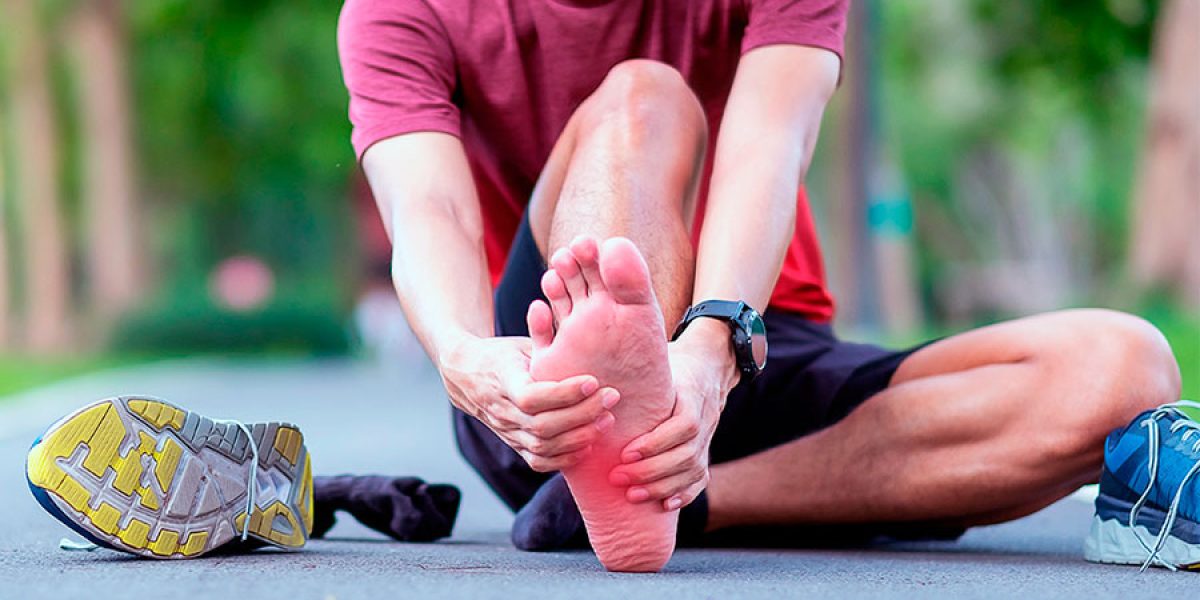
Laura is a passionate runner, running 48 minutes in the last 10K in Valencia. Every morning, before sunrise, she puts on her running shoes and goes for a run in the park just a few meters from her house. For years, running has been her escape, her time to unwind. But a few months ago, something changed.
It all started with a slight discomfort in her heel when she got up, just as her feet touched the floor. At first, she ignored it. She thought, "It must be an overload," "Surely it's nothing." However, as the days passed, that morning pain became more intense and persistent. Every step out of bed felt like stepping on a nail.
And, worst of all, it affected his performance. He couldn't stride as smoothly, and frustration began to set in. He tried to run slower, but even then, he couldn't. Finally, he decided to seek help. He saw a physical therapist, who gave him a clear diagnosis: plantar fasciitis .
What is plantar fasciitis and why does it occur?
Plantar fasciitis is an inflammation of the plantar fascia, a band of tissue that runs across the sole of the foot from the heel to the toes. Its function is to provide support to the arch of the foot and absorb shock when walking or running.
However, when this structure is overloaded by intense training, improper footwear use, or gait disturbances, it can become inflamed and cause intense pain, especially in the heel area.
It is common in runners , people who spend many hours standing , or those with biomechanical problems in their gait.
Mistakes that make plantar fasciitis worse
Laura realized that she was making some mistakes that were intensifying her problem:
- Ignore the initial discomfort . Like many runners, you thought it was temporary and didn't give it much thought until the pain became debilitating.
- Not wearing the right shoes . Her sneakers were already worn out and didn't offer enough cushioning.
- Continuing to run without adaptations . Pushing through training without adjusting the intensity made the inflammation worse.
- No stretching or strengthening of the foot . The focus was on general stretches, but not specific stretches for the plantar fascia.
How to relieve pain and keep training
After receiving her diagnosis of plantar fasciitis, Laura decided not to completely abandon her exercise routine. Instead, she adapted her training and followed a professionally supervised rehabilitation plan. These were the keys to her recovery:
1. Stretching and strengthening exercises
- Fascia Stretch : While seated, stretch your toes upward with your hand, holding the position for 30 seconds to reduce tension in the sole of your foot. [1]
- Roller or ball : Roll a frozen water bottle or tennis ball under the sole of your foot to massage the area and reduce inflammation. [2]
- Towel exercises : Pick up a towel with your toes to strengthen your intrinsic muscles and improve arch stability. [3]
Scientific note | According to the Spanish Society of General and Family Physicians (SEMG), performing stretching and strengthening exercises at least three times a week reduces discomfort associated with plantar fasciitis by 40% within 4 to 8 weeks.
2. Use appropriate footwear
Laura replaced her sneakers with ones with more appropriate cushioning and arch support. Soon after, she began wearing orthotics recommended by her podiatrist, which marked a turning point in her recovery. [4]
- The use of insoles redistributed the loads on his gait , allowing him to continue training smoothly while the inflammation resolved.
- Once the pain is gone, the podiatrist would consider removing these insoles. [5]
Curiosity | Studies published in Footwear Science indicate that 75% of patients with plantar fasciitis experience significant improvements when proper footwear and custom insoles are combined.
3. Adjustment in training
Laura reduced the intensity of her running sessions, avoided very hard surfaces and alternated running with low-impact exercises , such as swimming and cycling. [6]
- With this strategy, he managed to maintain a training volume sufficient to maintain his endurance.
- He ran fewer kilometers, but maintained the same pace , avoiding worsening the injury.
Scientific Note | Research in Medicine Science in Sports Exercise shows that combining low-impact workouts with moderate running sessions can maintain aerobic capacity while minimizing stress on the plantar fascia.
4. Use of complementary therapy
To reduce inflammation and speed up recovery, Laura followed these steps: [7]
- Applying ice to the area after running for 15-20 minutes helped control the pain.
- Physiotherapy: He received massages on the sole of his foot and shock wave therapy sessions, a treatment that stimulates the regeneration of damaged tissue.
Curiosity | According to an article in the European Journal of Physical and Rehabilitation Medicine, extracorporeal shock wave therapy (ESWT) shows a 70% improvement rate in patients with chronic plantar fasciitis.
The small change that made the difference
Although all these changes helped, Laura still experienced discomfort when running long distances. That's when her podiatrist recommended she try Podoks biomechanical socks .
These socks have a special design with a compressive band on the arch , padding on the heel and separation of the first toe , which helps stabilize the foot and reduce tension on the plantar fascia.
From the very first moment, Laura noticed a difference. She felt more support, less fatigue, and greater comfort with every stride. Little by little, her pain disappeared, and she was able to run again without fear of injury.
Conclusion: Don't ignore your body's signals
If you relate to Laura's story, remember that plantar fasciitis isn't the end of your training . Listen to your body, make adjustments, and try solutions that help relieve pain without compromising your passion for running.
And if you're looking for extra support for your feet, Podoks may be the ally you need . Give your feet the care they deserve and continue enjoying running pain-free. Your next stride could be your best! 🏃♀️💪
Bibliographic references
- Spanish Society of General and Family Physicians (SEMG). (2021). Therapeutic exercises in the treatment of plantar fasciitis.
- The Journal of Foot and Ankle Research. (2019). Self-massage Techniques for Plantar Fasciitis Relief.
- Spanish Association of Physiotherapy (AEF). (2020). Manual for strengthening the intrinsic muscles of the foot.
- Footwear Science. (2021). Impact of Appropriate Footwear in Plantar Fasciitis Recovery.
- Spanish Association of Sports Podiatry. (2020). Orthopedic insoles: when and how to use them.
- Medicine & Science in Sports & Exercise. (2020). Balancing Low-Impact Training and Running in Foot Injury Prevention.
- European Journal of Physical and Rehabilitation Medicine. (2019). Shock Wave Therapy Efficacy in Chronic Plantar Fasciitis.
In short, Laura managed to recover from her plantar fasciitis without giving up her passion for training thanks to a combination of specific exercises, appropriate footwear, routine adjustments, and complementary therapies. This comprehensive approach allowed her to remain active while protecting her plantar fascia, a vital tissue for mobility and athletic performance.
To learn more, we recommend reading our Complete Guide to Plantar Fasciitis .



Leave a comment
All comments are moderated before being published.
This site is protected by hCaptcha and the hCaptcha Privacy Policy and Terms of Service apply.