
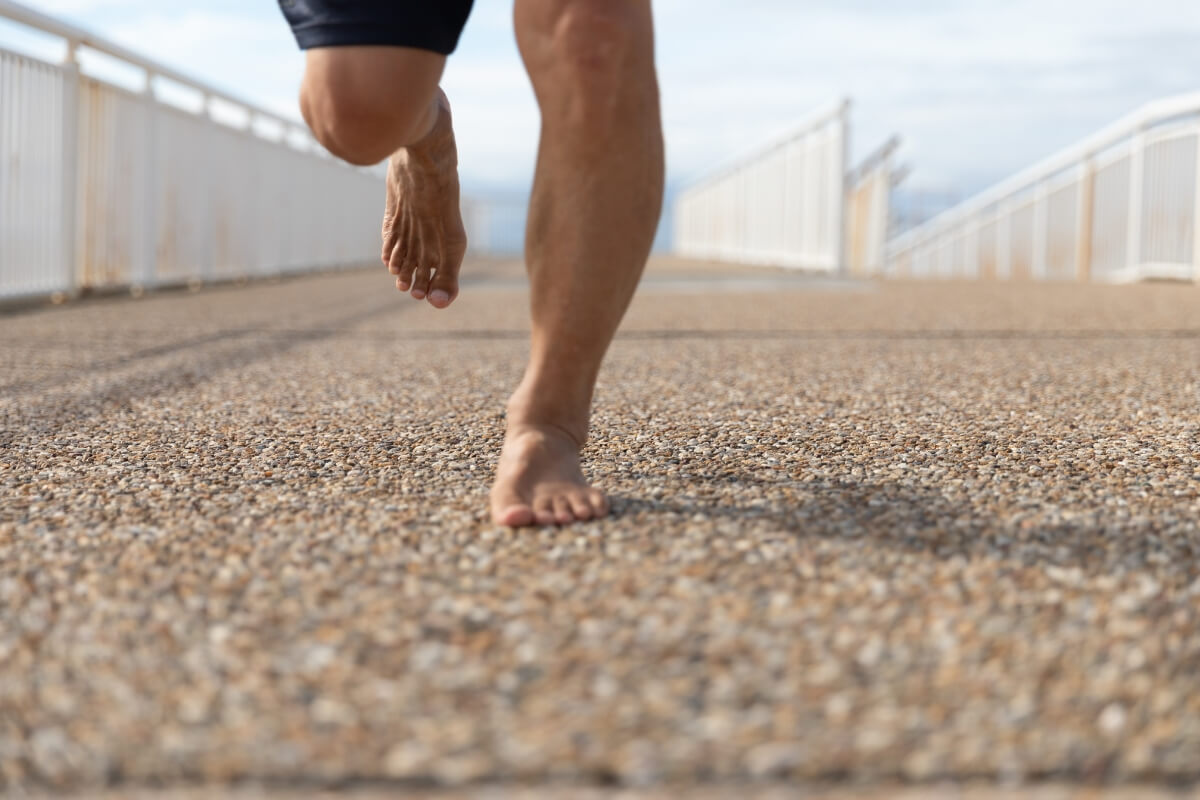
In recent years, the barefoot running trend has experienced a remarkable resurgence, transforming from a marginal practice into a movement with enthusiastic followers around the world.
This trend has been accompanied by extraordinary claims about its benefits, from injury prevention to revolutionary improvements in running efficiency.
However, the popularization of barefoot running—as the practice is known—has also generated controversy and heated debate among health professionals, researchers, and runners.
While some argue that it's the most natural and healthy way to run, others warn of significant risks and a lack of solid scientific evidence to support many of the bolder claims.
At Podoks, we've written this article to examine the available scientific evidence on barefoot running, analyzing the biomechanical foundations of this practice and separating proven facts from popular beliefs. This way, we can provide you with a balanced perspective based on current research.
Origins of the barefoot running movement
Modern interest in barefoot running has roots dating back to decades of anthropological and biomechanical research, although its widespread popularity is relatively recent.
Anthropological foundations
Anthropological studies have documented that many indigenous populations have run barefoot for millennia, developing highly efficient running techniques to cover long distances.
Research with groups such as the Tarahumara of Mexico and the Kalenjin of Kenya has shown distinctive running patterns that differ significantly from those observed in runners wearing modern footwear.
These studies have suggested that the natural human running style may be different from the way we've developed running with conventional athletic footwear, fueling interest in recovering these ancient techniques.
The influence of "Born to Run"
The publication of Christopher McDougall's book "Born to Run" in 2009 catapulted the barefoot running movement into the mainstream. The book combined adventurous narrative with scientific arguments, presenting the thesis that humans had evolved to be ultra-distance runners and that modern footwear had distorted this natural ability.
Although the book has been criticized for some scientific simplifications, its impact on popularizing the concept was undeniable, generating an exponential increase in interest in barefoot running and minimalist footwear.
Development of minimalist footwear
Along with the growing interest in barefoot running, the athletic footwear industry developed the concept of minimalist shoes. These shoes attempt to simulate the experience of barefoot running while providing basic protection from the elements.
Minimalist footwear is characterized by zero or minimal drop, a thin sole, maximum flexibility, and reduced weight, seeking to interfere as little as possible with the foot's natural biomechanics.
The publication of Christopher McDougall's book "Born to Run" in 2009 catapulted the barefoot running movement into mainstream attention.
Biomechanics of barefoot running
The biomechanical differences between barefoot running and running with conventional shoes are significant and affect multiple aspects of running technique. These differences have been the subject of numerous scientific studies that have provided objective data on the changes that occur when footwear is eliminated.
Ground contact patterns
One of the most well-documented differences between barefoot and shod running is the initial ground contact pattern. Barefoot runners tend to land on the midfoot or forefoot, while runners wearing conventional shoes typically make initial contact with the heel.
This change in landing pattern has significant implications for impact forces and their distribution through the musculoskeletal system.
Forefoot or midfoot landing allows for more gradual shock absorption through the eccentric action of the calf muscles and deformation of the plantar arch.
Modifications in cadence and stride length
Biomechanical studies have shown that barefoot running typically results in an increase in cadence and a reduction in stride length. These changes may contribute to a reduction in impact forces and more conservative running mechanics.
A higher cadence is associated with shorter ground contact time and a reduced braking moment during each step, which can improve running energy efficiency.
Differential muscle activation
Barefoot running requires greater activation of the intrinsic muscles of the foot and the stabilizing muscles of the ankle and calf. This increased muscular demand can contribute to strengthening these structures, but it can also predispose to earlier fatigue during the transition.
Electromyographic studies have documented different muscle activation patterns, with greater activation of the plantar muscles and altered temporal coordination between different muscle groups of the lower extremity.

Potential benefits of barefoot running
Scientific research has identified several potential benefits of barefoot running, although it's important to note that many of these benefits require a gradual adaptation period and may not be immediately apparent.
Strengthening the foot muscles
One of the most consistently documented benefits of barefoot running is the strengthening of the intrinsic muscles of the foot. These small muscles, which often atrophy with prolonged use of overly supportive footwear, regain strength and function when forced to work more intensely.
Strengthening these muscles can improve foot stability, arch function, and the ability to adapt to uneven surfaces.
Some studies have suggested that this strengthening may contribute to the prevention of certain injuries related to foot muscle weakness.
Improved proprioception
Removing footwear directly exposes the mechanoreceptors on the sole of the foot to tactile stimulation from the ground.
This increased stimulation can improve proprioception and sensory feedback, contributing to better motor control and stability.
Improved proprioception can translate into a better ability to adapt to uneven terrain and a potential reduction in the risk of injury due to loss of stability.
Reduction of impact forces
Although it may seem counterintuitive, several studies have shown that barefoot running can result in lower impact forces than running in conventional footwear.
This reduction is primarily due to the change in landing pattern and the more conservative biomechanics that barefoot runners naturally adopt. The reduction in impact forces could have positive implications for the prevention of overuse injuries, although this relationship is not yet fully established in the scientific literature.
Energy efficiency
Some studies have suggested that barefoot running may be more energy efficient than running in heavy footwear. This increased efficiency is attributed to the reduction in weight on the feet, altered biomechanics, and the elimination of energy loss associated with the deformation of shoe soles.
However, the benefits in energy efficiency are generally small and may not be evident during the adaptation period, when energy costs may temporarily increase due to the increased muscle activation required.
Barefoot runners tend to land on the midfoot or forefoot, while runners in conventional shoes typically make initial contact with the heel.
Risks and disadvantages of barefoot running
Despite the potential benefits, barefoot running also carries significant risks that must be carefully considered. Many of these risks are related to the lack of protection and abrupt biomechanical changes.
Injuries caused by external objects
The most obvious risk of barefoot running is exposure to injuries caused by objects on the ground. Rocks, glass, nails, or other objects can cause cuts, punctures, or abrasions that can be serious and require medical attention.
This risk is especially high in urban environments where the presence of dangerous objects is more common, and can significantly limit the route options available to the barefoot runner.
Overload of non-adapted structures
The abrupt transition to barefoot running can overload musculoskeletal structures that are not adapted to the new biomechanical demands. The calf muscles, Achilles tendon, and plantar fascia are particularly susceptible to overuse injuries during the transition.
Studies have documented an increased incidence of injuries such as Achilles tendinopathy, metatarsal stress fractures, and plantar fasciitis in runners who transition too quickly to barefoot running.
Environmental limitations
Barefoot running presents significant limitations in terms of environmental conditions. Very hot or cold surfaces, abrasive terrain, and adverse weather conditions can make barefoot running impractical or dangerous.
These limitations can significantly restrict training flexibility and competition participation, especially in extreme climates or during certain seasons.
Lack of cushioning on hard surfaces
Although biomechanical changes may reduce impact forces, barefoot running on very hard surfaces such as asphalt or concrete can still place significant loads on the structures of the foot and leg.
The lack of external cushioning can be problematic for runners with certain anatomical or biomechanical characteristics.

What the scientific evidence says
Scientific research on barefoot running has grown exponentially over the past decade, but it still has significant limitations that make it difficult to draw definitive conclusions about many of the popular claims.
Studies on injury prevention
Studies investigating whether barefoot running prevents injuries have shown mixed results. While some have found reductions in certain types of injuries, others have documented increases in different types of injuries.
Crucially, there are no long-term longitudinal studies that definitively compare injury rates between barefoot and shod runners.
Current evidence suggests that barefoot running may change the types of injuries runners experience rather than reducing the overall incidence of injuries. Ankle and foot injuries may increase, while knee and hip injuries may decrease.
Performance research
Studies on the impact of barefoot running on athletic performance have shown variable and generally small effects. While some parameters, such as energy efficiency, may improve marginally, other aspects of performance may be compromised, especially during the adaptation period.
Most studies have been conducted in the laboratory with short-duration protocols, which limits their applicability to real-life running situations and long distances.
Limitations of current research
Barefoot running research faces several methodological challenges. The difficulty of conducting blinded studies, the heterogeneity of the populations studied, and the variability in transition protocols limit the ability to draw universal conclusions.
Furthermore, many studies have been conducted with small samples and short follow-up periods, which limits their statistical power and relevance to long-term effects.
Among barefoot runners, there is an increased incidence of injuries such as Achilles tendinopathy, metatarsal stress fractures, and plantar fasciitis.
Common myths about barefoot running
The barefoot running movement has generated numerous myths and claims that are not supported by solid scientific evidence. It's important to distinguish between proven benefits and unfounded popular beliefs.
"It's the natural way to run"
While it's true that humans have run barefoot for most of their evolutionary history, this doesn't necessarily mean it's the optimal way to run in the modern context. The surfaces, distances, and goals of modern running are very different from those in ancestral contexts.
Furthermore, the concept of "natural" does not automatically equate to "better" or "healthier" in all contexts.
"Eliminates all injuries"
The claim that barefoot running prevents all injuries is clearly false. While it may reduce certain types of injuries, it may increase others. There is no evidence that any type of running completely eliminates the risk of injury.
"It's immediately better"
Many barefoot running enthusiasts have promoted the idea that the benefits are immediate. Scientific evidence suggests otherwise: adaptation to barefoot running is a gradual process that can take months or years, and during this period the risk of injury may be increased.

Minimalist footwear as an alternative
Minimalist footwear has emerged as a compromise between barefoot running and conventional footwear, attempting to maintain many of the biomechanical benefits of barefoot running while providing basic protection.
Characteristics of minimalist footwear
Minimalist footwear is characterized by a thin, flexible sole, minimal or zero drop, reduced weight, and a construction that allows for maximum foot flexibility. These designs aim to minimally interfere with the foot's natural biomechanics while providing protection from external elements.
Evidence on minimalist footwear
Studies on minimalist footwear have shown that it can provide many of the biomechanical changes associated with barefoot running, but with a lower risk of injury from external objects. However, the risks of overload during the transition remain significant.
The transition to minimalist footwear requires the same patience and gradualness as the transition to barefoot running, as the biomechanical changes are similar.
Safe transition process
For runners who decide to experiment with barefoot or minimalist running, a gradual and systematic transition process is essential to minimize the risk of injury.
Principles of gradual transition
The transition should begin with very short sessions, typically 5-10 minutes, on soft surfaces such as grass or running tracks. The increase in volume should be very gradual, no more than 10% per week, and should be accompanied by adequate recovery periods.
It's important to listen to your body's signals and not force progression if discomfort or signs of overuse appear. Many injuries related to the transition to barefoot running are due to overly aggressive progression.
Preparatory exercises
Before beginning the transition, it's beneficial to perform specific exercises to strengthen the foot muscles and improve ankle and calf flexibility. Exercises such as toe pick-ups, heel raises, and specific stretches can facilitate the adaptation.
Monitoring and adjustments
During the transition, it's important to constantly monitor your sensations and adapt the program as needed. The appearance of pain, inflammation, or persistent discomfort should lead to a temporary reduction in volume or a complete break.
The transition to barefoot running can take months or years and requires a gradual, monitored process.
Considerations for different types of runners
Barefoot running is not appropriate for all runners, and there are certain conditions and individual characteristics that may contraindicate its practice or require special precautions.
Runners with diabetes
Runners with diabetes, especially those with peripheral neuropathy, face significantly increased risks when running barefoot. Reduced sensitivity can prevent the detection of minor injuries that can progress to serious complications.
Foot deformities
Runners with structural foot deformities such as severe flat feet, pes cavus, or hallux valgus may not be appropriate candidates for barefoot running. These conditions may require specific support that can only be provided through appropriate footwear or orthotic devices.
High-volume brokers
Runners who train at very high volumes may find it impractical to complete their entire training load barefoot due to environmental limitations and the increased risk of overload. In these cases, a gradual and partial incorporation may be more appropriate.
Context in modern podiatric practice
From a professional podiatric perspective, barefoot running should be considered as one tool within the spectrum of therapeutic and training options, not a universal solution.
Individualized assessment
Each runner should be evaluated individually, taking into account their biomechanics, injury history, athletic goals, and anatomical limitations. What works for one runner may be counterproductive for another.
Integration with conventional treatment
Barefoot running can be useful as a complement to conventional treatments for certain conditions, but it should rarely be the sole intervention. Its combination with specific exercises, physical therapy techniques, and appropriate footwear is often more effective.
Professional monitoring
Runners who decide to experiment with barefoot running benefit from professional supervision, especially during the early stages of the transition. Early detection of potential problems can prevent more serious injuries.

The role of biomechanical socks in the transition to barefoot running
The transition to barefoot running can take months or years and requires a gradual and monitored process. During this period, Podoks biomechanical socks can play a valuable role as a support in the adaptation process.
Progressive strengthening of the foot muscles
Podoks biomechanical socks are designed to activate the intrinsic muscles of the foot through their specific construction, which provides targeted support to the plantar fascia. This muscle activation can serve as preparation for the increased demands these muscles will experience during barefoot running.
By incorporating Podoks socks into their training sessions with conventional footwear, runners can begin the muscle strengthening process before transitioning to barefoot running, creating a stronger foundation for later adaptation.
Improving proprioception with protection
Although biomechanical socks don't completely eliminate the barrier between the foot and the ground, their minimalist construction allows for greater sensory feedback than conventional, over-cushioned footwear. This feature can help gradually improve proprioception without the full ground exposure required for barefoot running.
This progressive improvement in body awareness can facilitate the biomechanical adaptation necessary when progressing toward minimalist footwear or completely barefoot running.
Injury Prevention During Transition
During the adaptation period to barefoot running, the foot and calf structures are particularly vulnerable to overuse injuries. Podoks biomechanical socks can provide targeted support to the plantar fascia and help reduce muscle fatigue during the early stages of the transition.
This support can be especially valuable during days with higher training volume or when combining sessions in conventional footwear with short periods of barefoot or minimalist running.
Suggested integration protocol
For runners planning a transition to barefoot running, Podoks socks can be integrated in the following ways:
Preparatory phase (4-6 weeks): Wear Podoks socks throughout training with conventional footwear to initiate muscle strengthening and proprioceptive adaptation.
Early transition phase (2-4 months): Continue wearing Podoks socks during shod sessions while introducing short periods of barefoot or minimalist running.
Consolidation phase: Continue wearing Podoks socks during higher volume or intensity sessions while gradually increasing your barefoot running time.
Limitations and considerations
It's important to note that biomechanical socks do not replace the need for a gradual and careful transition to barefoot running. Their purpose is complementary and supportive, not a replacement for the fundamental principles of gradual progression and body listening.
Runners should continue to follow recommended adaptation times and not rush the transition based solely on the use of biomechanical socks. Professional supervision is still recommended, especially for runners with a history of injuries or specific foot conditions.

Conclusion
The barefoot running trend represents an interesting phenomenon that has provided valuable insights into running biomechanics and challenged some traditional assumptions about athletic footwear. However, it is not a universal panacea nor is it appropriate for all runners.
Current scientific evidence suggests that it may offer specific benefits for certain runners in specific contexts, but it also carries significant risks that should be carefully considered.
The decision to incorporate barefoot running should be based on an individualized assessment, clear goals, and a gradual, monitored transition process.
As with many aspects of this sport, there is no one-size-fits-all solution. The diversity in runners' biomechanics, anatomy, and goals requires individualized approaches that consider both the potential benefits and risks inherent in any significant modification to running technique.
-----
Scientific references:
Lieberman, D.E., et al. (2010). "Foot strike patterns and collision forces in habitually barefoot versus shod runners." Nature, 463(7280), 531-535.
Squadrone, R., & Gallozzi, C. (2009). "Biomechanical and physiological comparison of barefoot and two shod conditions in experienced barefoot runners." Journal of Sports Medicine and Physical Fitness, 49(1), 6-13.
Hollander, K., et al. (2017). "Adaptation of running biomechanics to repeated barefoot running: a randomized controlled study." American Journal of Sports Medicine, 45(7), 1582-1588.
Ridge, S.T., et al. (2013). "Foot bone marrow edema after a 10-week transition to minimalist running shoes." Medicine & Science in Sports & Exercise, 45(7), 1363-1368.
Perkins, K.P., et al. (2014). "The risks and benefits of running barefoot or in minimalist shoes: a systematic review." Sports Health, 6(6), 475-480.
Thompson, M.A., et al. (2016). "The effect of even, uneven and compliant surfaces on walking and running biomechanics: implications for injury risk." Gait & Posture, 46, 76-82.
Altman, A.R., & Davis, I.S. (2016). "Prospective comparison of running injuries between shod and barefoot runners." British Journal of Sports Medicine, 50(8), 476-480.




Leave a comment
All comments are moderated before being published.
This site is protected by hCaptcha and the hCaptcha Privacy Policy and Terms of Service apply.