
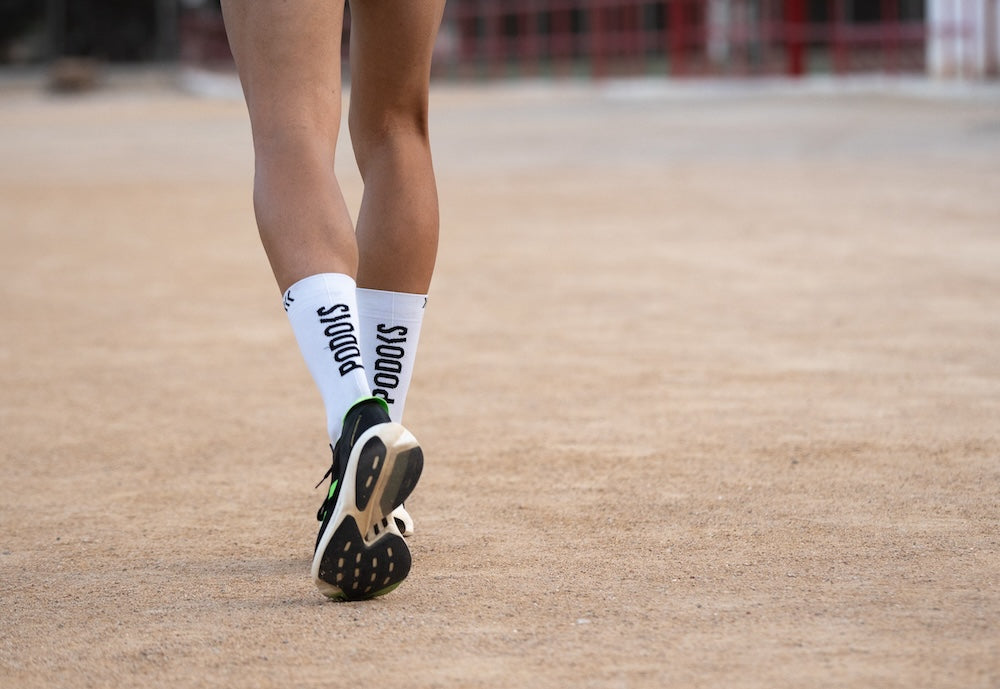
Starting to run is one of the best decisions for improving your health and well-being. However, beginner runners often face injuries due to poor technique, excessive weight, or wearing inappropriate footwear. In this article, we explain the most common running injuries and how to treat them so you can continue enjoying this sport pain-free.
1. Muscle overload
What is it?
Muscle strain is one of the first discomforts experienced by new runners. It involves excessive muscle fatigue due to repetitive strain, especially in the legs.
Main causes:
- Lack of warm-up and stretching.
- Sudden increase in intensity or distance.
- Using footwear with little cushioning.
How to treat and prevent it:
- Warm up and do dynamic stretching before running.
- Increase the load progressively (10% rule: do not increase the weekly distance or intensity by more than 10%).
- Use biomechanical socks like Podoks Running , which reduce muscle fatigue and improve foot stability.
2. Achilles tendinopathy
What is it?
It's an inflammation of the Achilles tendon, which connects the calf muscles to the heel. It can cause pain in the back of the ankle.
Main causes:
- Sudden increase in training intensity.
- Lack of stretch in the calf muscles.
- Using shoes with a very low drop or excessively rigid.
How to treat and prevent it:
- Apply ice after running and massage the area.
- Calf stretches and soleus strengthening.
- Choose shoes with an appropriate drop (between 8-12mm).
- Use of Podoks Running , which provides greater stability and shock absorption, reducing stress on the Achilles tendon.
3. Plantar fasciitis
What is it?
It is an inflammation of the plantar fascia, a band of tissue that runs along the sole of the foot from the heel to the toes. It is characterized by sharp pain on the inside of the heel, especially in the morning.
Main causes:
- Use of inappropriate footwear with little cushioning.
- Overload due to overtraining.
- Flat or pronated foot without correction.
How to treat and prevent it:
- Apply ice and stretch your plantar fascia and calf.
- Use Podoks Running , which has been shown to reduce dynamic plantar pressure under the head of the first metatarsal by 25% and by 23% on the first toe , promoting the activation of the Windlass mechanism.
- Avoid running on very hard surfaces and alternate with low-impact exercises such as cycling or swimming.
4. Runner's knee (iliotibial band syndrome)
What is it?
It's a pain on the outside of the knee caused by the iliotibial band rubbing against the femur. It's very common in beginner runners.
Main causes:
- Sudden increase in mileage.
- Poor leg alignment when running.
- Wearing shoes without sufficient arch support.
How to treat and prevent it:
- Temporarily reduce training load.
- Perform glute and core strengthening exercises.
- Use Podoks Running , which stabilizes the step and reduces the impact on the knee thanks to its padding in the heel and metatarsals.
- Choose shoes with good stability and cushioning.
5. Tibial periostitis
What is it?
Pain on the inside of the tibia due to inflammation of the periosteum, a membrane that covers the bone. It often occurs in beginner runners who increase their intensity too quickly.
Main causes:
- Running on hard surfaces without adequate cushioning.
- Wearing worn-out sneakers or sneakers with very thin soles.
- Lack of strength in the calf muscles.
How to treat and prevent it:
- Active rest and ice application.
- Use shoes with good cushioning.
- Include strengthening exercises for the tibia and calf.
- Use of Podoks Running , which could reduce the impact on the tibial area by improving the biomechanics of the foot.
General recommendations to avoid injuries when running
To prevent injuries and improve your running experience, follow these tips:
✅ Choose the right footwear: Wear sneakers with good fit, cushioning, and stability.
✅ Use Podoks biomechanical socks: They help reduce muscle fatigue and improve stability.
✅ Warm up properly: Mobilize your joints and do dynamic stretches.
✅ Increase the load progressively: Do not increase the weekly distance or intensity by more than 10%.
✅ Includes muscle strengthening: Core, glute, and calf exercises reduce the risk of injury.
✅ Listen to your body: If you experience persistent pain, reduce your load and consult a specialist.
Conclusion
Running is an excellent activity for your health, but without proper preparation, it can lead to annoying injuries. The key is prevention: wearing good footwear, Podoks biomechanical socks, and following a proper training progression .
If you feel discomfort, don't ignore your body's signals and act quickly to avoid complications. Run smart and enjoy the ride!




Leave a comment
All comments are moderated before being published.
This site is protected by hCaptcha and the hCaptcha Privacy Policy and Terms of Service apply.