
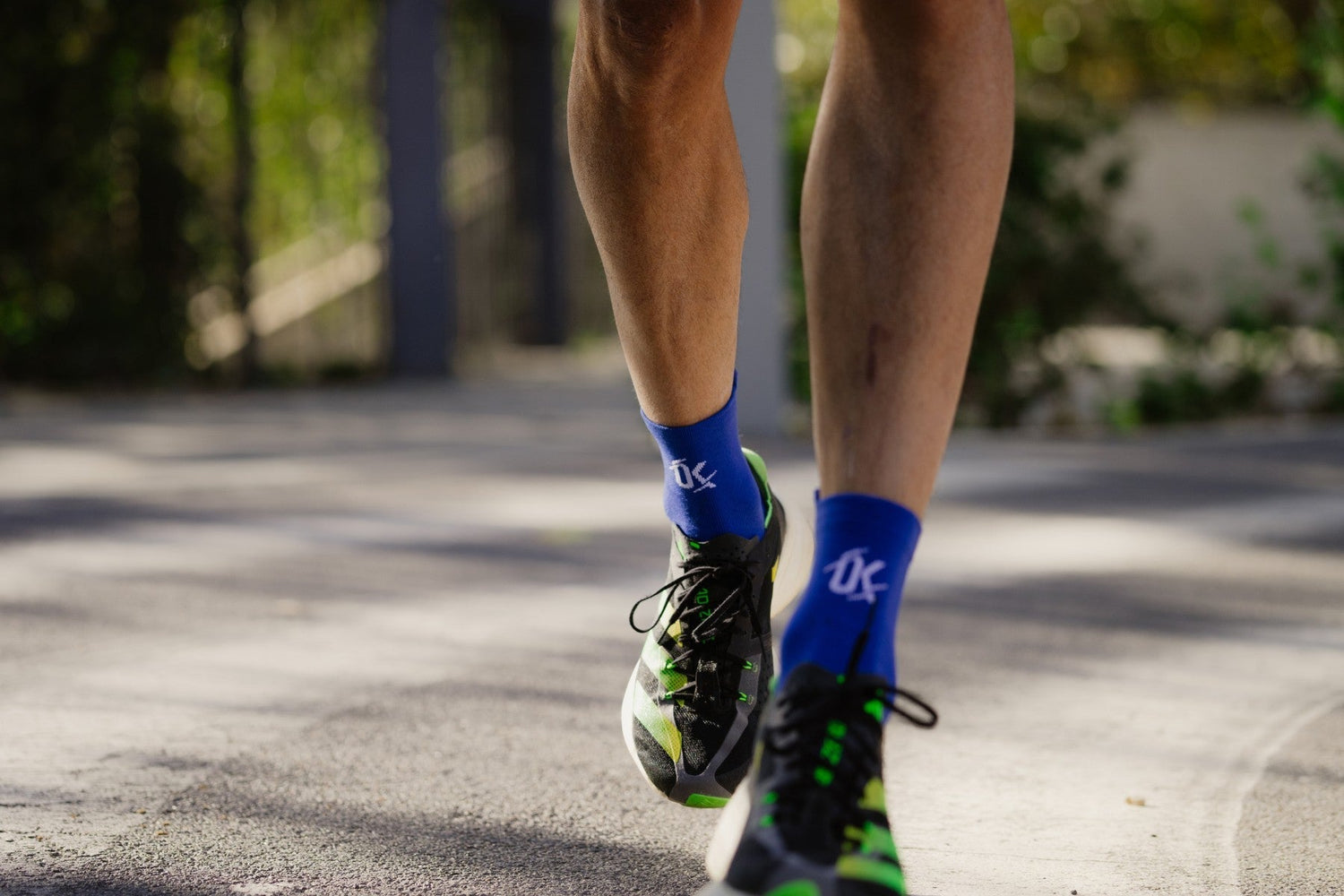
Walking for days—sometimes weeks—with a backpack on your back, over stretches of asphalt, dirt, and rock, in rain or shine, requires more than willpower: it demands careful choice of equipment.
And among all the elements that will make a difference in your experience, socks occupy a place as important as boots.
Routes such as the Camino de Santiago, the Camino del Norte, and the Ruta del Cid are part of a growing interest in long-distance walking, a growing trend among those seeking relaxation, a physical challenge, and connection with their surroundings.
But the reality is that many pilgrims abandon their hike early due to avoidable discomfort: blisters, strains, metatarsalgia, or plantar fasciitis.
A good sock acts as a protective barrier against overheating, chafing, and mechanical impact. Furthermore, if well designed, it helps stabilize the stride, promotes circulation, and improves venous return.
In this guide, you'll find everything you need to know to choose the right socks for walking the Camino de Santiago : from the most suitable type of material to the essential characteristics of a good sock for long walks, including common mistakes that are best avoided.
Why are socks important?
Although it may seem like a minor detail, socks are the first layer of footwear that comes into contact with your skin. During a 20- or 30-kilometer hike, each foot can hit the ground more than 20,000 times.
This constant repetition, combined with humidity, friction, poorly distributed pressure, or inappropriate materials, can trigger discomfort and even injuries that force you to stop the Camino.
A good sock acts as a protective barrier against overheating, chafing, and mechanical impact. Plus, if well-designed, it helps stabilize your stride, promotes circulation, and improves venous return. On multi-day hikes, this difference is noticeable. A lot.
A good technical sock:
- Reduces friction and the risk of blisters.
- Improves the distribution of plantar pressures.
- Stabilizes the step.
- Minimizes muscle fatigue.
And if it also incorporates biomechanical technology, the benefits go a step further.

Which fabric is best (and which to avoid)
State-of-the-art synthetic materials, such as technical polyester, elastane, polyamide, and high-performance fibers like Coolmax, have proven to be the most effective for long walks. These fabrics wick away perspiration quickly, dry quickly, and keep feet dry and cool.
Some even incorporate antibacterial technologies that reduce the appearance of fungi or bad odor, as is the case with Coolmax, the patented fabric we use at Podoks to make our biomechanical socks .
On the other hand, cotton socks are one of the worst possible choices for a multi-day hike. While they may seem comfortable at first, cotton absorbs and retains moisture. This persistent moisture promotes blisters, overheating, and fungal infections.
In addition, cotton easily loses its shape, causing creases or shifting that end up causing chafing.
What happens if you choose the wrong socks?
It's not uncommon to find pilgrims abandoning their hike early due to a poor choice of something as simple as socks. Wearing a pair that's too thick, lacks adequate support, or is made of materials that don't breathe can lead to a long list of problems.
If the sock doesn't fit properly, has poorly positioned internal seams, or doesn't wick away moisture properly, blisters are almost inevitable.
Below we list some of the most common foot problems that can occur due to poor sock selection for a multi-stage hike like the Camino de Santiago.
Blistering
Blisters are a hiker's number one enemy. They form from repeated friction between the skin and a wet or rough material.
If the sock doesn't fit properly, has poorly positioned internal seams, or doesn't wick away moisture properly, blisters are almost inevitable.
On long stages or in areas with steep slopes, the combination of heat, pressure, and movement can turn even a minor chafing into a persistent pain.
Appearance of fungi and infections
Excess moisture inside shoes creates the ideal environment for fungal growth. Wet cotton socks worn for hours or days can promote the development of interdigital mycosis (athlete's foot), unpleasant odor, and, in some cases, bacterial infections.
This not only causes discomfort, but can also compromise the continuity of the Camino if it worsens or is not treated in time.
Cumulative biomechanical impacts
When a sock doesn't provide cushioning or stabilize your stride, the impact of your body hitting the ground isn't distributed properly. This negatively impacts the joints of the foot and can lead to fatigue in the stabilizing muscles.
As the days go by, this accumulation of microtrauma affects not only the feet, but also the ankles, knees, and hips, as the body attempts to compensate for imbalances through postural adjustments it is not equipped to sustain long-term.
Common injuries: plantar fasciitis and metatarsalgia
Plantar fasciitis is an inflammation of the tissue that runs along the sole of the foot. It manifests as a stabbing pain in the heel or midfoot, especially when starting a walk in the morning. It is very common in walkers who have worn socks that lack arch support or cushioning in the fascia.
Metatarsalgia, on the other hand, occurs in the forefoot and is characterized by a burning or stabbing sensation under the metatarsals. This discomfort is usually due to overuse of the forefoot, caused by improper weight distribution and a lack of cushioning in that area.
Both problems become more pronounced with each stage, until walking becomes a real torture.

What a good sock should have for the Camino de Santiago
The design of a technical sock goes far beyond the type of fabric. To be truly effective on long hikes, it must incorporate a series of functional features that combine to protect, stabilize, and optimize your stride.
Buffer zones
Quality socks incorporate padded reinforcements at the highest impact points: the heel, metatarsal area, and toes. These terry cloth zones absorb some of the impact with each step, reducing the strain on bones and joints. Furthermore, by reducing direct pressure on the skin, the likelihood of blisters is also reduced.
A good sock should dry quickly even after being hand-washed at the end of the stage.
Anatomical design and support of the plantar arch
A good sock should fit the shape of the foot, with different versions for the left and right feet. This specific anatomy allows for better support and prevents internal displacement while walking.
Compression in the plantar arch helps stabilize support, reducing foot collapse and improving gait mechanics.
Seamless construction
Seams, especially around the toes, are a common source of irritation. That's why high-performance socks are made without visible internal seams, using frictionless knitting technologies. This minimizes the risk of chafing, even during long shifts.
Breathability and quick drying
The materials should allow for rapid evacuation of perspiration, preventing the foot from remaining damp. Proper moisture management is key to preventing fungal growth and maintaining a stable temperature inside the shoe.
A good sock should dry quickly even after being hand-washed at the end of the stage.
Progressive compression (on specific models)
Some sock styles, such as compression stockings, are designed to improve venous return. This is especially useful for people prone to swelling or for very long runs, as compression helps reduce fatigue and promotes better recovery at the end of the day.
Which model should you choose for the Camino?
Choosing the right sock model depends on your needs, previous experience, physical characteristics, and the type of trail you plan to tackle. Walking the French Way of St. James from Roncesvalles is not the same as completing it from Astorga. The former will take several weeks over mountain trails, while the latter is shorter and covers less technical sections.
At Podoks, you have several ranges of socks designed by podiatrists and adapted to different needs, all of them based on biomechanical technology.
For most hikers, especially those without underlying health conditions, the best choice is the Podoks Running . This model is available in three heights—ankle, mid-cut, and high-cut—and is suitable for both trail runners and those who prefer lightweight boots. Their design balances breathability, cushioning, and arch support, making them a very versatile option for long stretches over mixed terrain.
Choosing the right socks can make the difference between arriving in Santiago with a smile... or in a taxi.
If you prioritize comfort above all else, or if this is your first Camino and you don't know how your feet will react after several days of walking, Podoks Comfort socks can be your best ally. These socks are designed for those who want to prevent complications, enjoying the journey with a constant feeling of protection.
For those who suffer from tired legs, swelling, or poor circulation, the best option is the Podoks Compression Stockings for tired legs. This model actively promotes venous return and reduces the feeling of fatigue after several hours of walking. They are especially recommended for demanding, steep, or long-lasting stages.
Finally, if you've experienced forefoot pain, metatarsal burning, or strain in the toe area in the past, you might want to consider the Podoks Metatarsalgia Relief . This model is specifically designed to redistribute the load to the forefoot, protecting the metatarsals and helping to prevent one of the most common ailments among untrained walkers or those with a certain biomechanical predisposition.

What does science say?
What sets Podoks socks apart from other technical socks is that they don't just protect: they act biomechanically on the foot to correct and improve its function. This is supported by scientific evidence.
The effectiveness of Podoks biomechanical socks has been validated in clinical and sports settings. A study published in the Spanish Journal of Podiatry analyzed the effect of Podoks socks on dynamic plantar pressures in the medial forefoot.
This study showed that, during walking, Podoks were able to significantly reduce the load on one of the most sensitive areas of the foot, something that directly affects the prevention of ailments such as metatarsalgia or the appearance of blisters in that specific region ( read study ).
In another clinical trial, also published in the same journal, the use of these socks was evaluated as part of the treatment for plantar fasciitis. Preliminary results showed a clear improvement in function and a reduction in pain in participants who regularly used Podoks socks, compared to the control group who did not ( see results ).
The right socks for the Camino de Santiago should be made of breathable materials that keep your feet cool and dry.
Furthermore, a recent biomechanical analysis, available on ResearchGate, examined the foot's response to the Jack Functional Test under three conditions: barefoot, with regular socks, and with Podoks. The study concluded that Podoks promote improved arch support and more efficient stride control, resulting in greater stability during walking and a lower risk of joint overload ( see study ).
This scientific backing makes Podoks much more than just a piece of clothing: they're a preventative and corrective tool for those who walk long distances.
Conclusions
It's often said that on the Camino de Santiago, the journey isn't as important as the arrival itself. But to enjoy every day, every landscape, and every encounter, it's essential to be able to walk without pain, injury, or constant worry about the condition of your feet.
Choosing the right socks may seem like a minor detail, but when we're talking about 100, 300, or even 800 kilometers on foot, that detail becomes a strategic decision. No ultralight backpack or technical boot can compensate for poorly chosen socks.
Choosing the right socks can make the difference between arriving in Santiago with a smile... or in a taxi.
The right socks for a multi-stage hike like the Camino de Santiago should be made of breathable materials that keep your feet cool and dry, such as the Coolmax fabric we use to make Podoks.
These materials, in addition to preventing the appearance of blisters and fungus, also have greater durability and tear resistance.
On the other hand, it's important that the socks you choose for the Camino de Santiago have some type of padding in strategic areas, such as the heel and metatarsal area, to absorb impacts and reduce pressure on your footstep.
Podoks are designed so your feet not only endure, but also enjoy the Camino with you. Because if your feet carry you, you just have to let them carry you.
-----
Scientific references:
Reducing plantar pressure with biomechanical socks . Spanish Journal of Podiatry (2023). This clinical study measured dynamic pressures on the forefoot during walking, observing that Podoks socks significantly reduced loads on the medial plantar area, which is key during prolonged walking.
Randomized clinical trial on plantar fasciitis and the use of biomechanical socks . Spanish Journal of Podiatry (2023). Preliminary results showing functional improvement and pain reduction in patients with plantar fasciitis treated with Podoks as part of a conservative approach.
Biomechanical effect of the Jack test with biomechanical socks vs. conventional socks and barefoot . ResearchGate (2024). Biomechanical study evaluating the function of the plantar arch under different conditions. The results indicate improved biomechanical control with Podoks socks.
Friction blisters: pathophysiology, prevention and treatment . Knapik JJ, Reynolds KL, Duplantis KL, Jones BH. Journal of the American Academy of Dermatology (1995). This article reviews the causes of friction blisters, highlighting the role of moisture, heat, and improper footwear.
A systematic review on the effectiveness of compression garments on recovery following physical activity . Hill J, Howatson G, et al. Sports Medicine (2014). Review demonstrating how compression socks can improve venous return and reduce post-exercise fatigue.



Leave a comment
All comments are moderated before being published.
This site is protected by hCaptcha and the hCaptcha Privacy Policy and Terms of Service apply.