
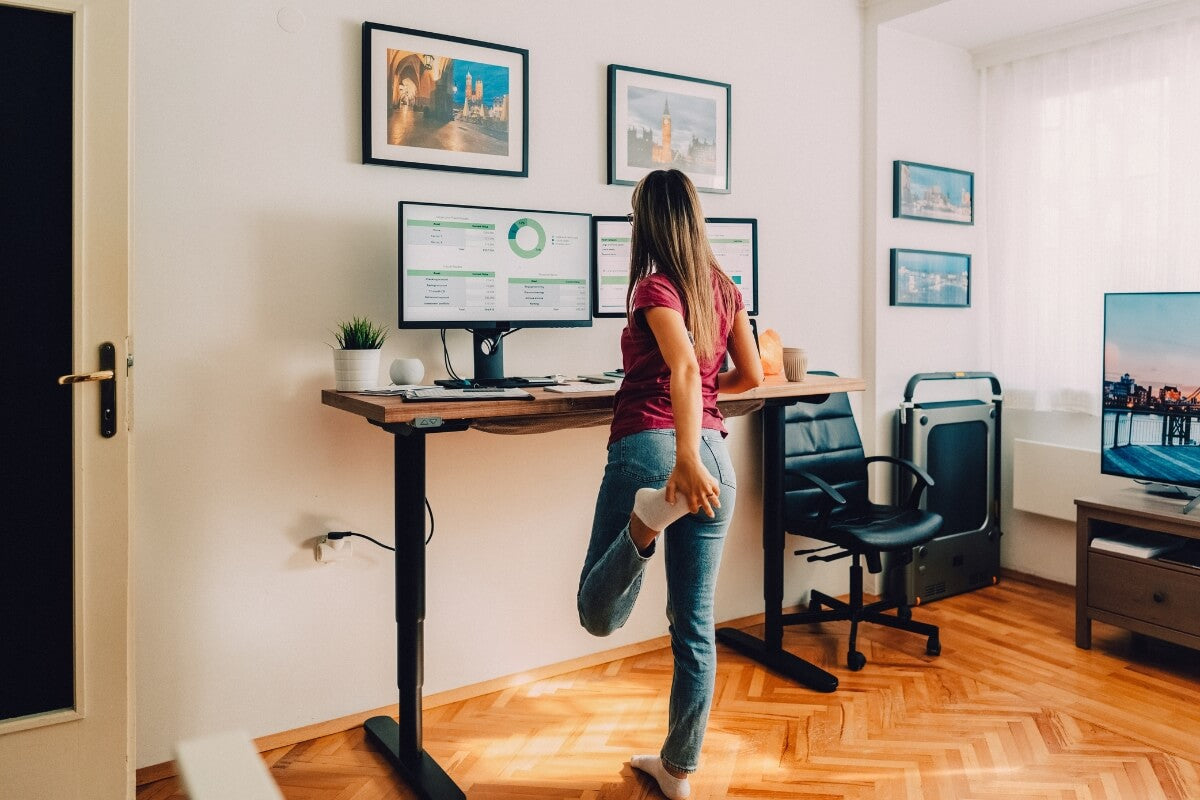
Are you a waiter, a shop assistant, a security guard, a nurse, or do you work in any other sector that requires you to spend long hours on your feet? Then this article is for you.
Although it may seem like standing is healthier than sitting, the reality is that working on your feet for 8 hours or more can have serious consequences for the health of your feet and your cardiovascular system.
The good news is that there are effective strategies to protect your feet and maintain your well-being during those long workdays. We'll tell you everything you need to know to take care of your feet if you work on your feet.
The real risks of working standing up for long hours
Before we get into the solutions, it's important to understand what's actually happening in your body when you stand for extended periods.
Circulatory problems
Contrary to popular belief, working while standing is not beneficial for your circulatory system. When you remain standing for hours, your heart must work harder to pump blood from your feet to your heart, fighting against gravity.
This extra effort causes chronic venous stasis, where blood accumulates in the legs, hindering venous return. As a result, the dreaded varicose veins appear, as the veins become inflamed from the constant pressure.
But the most worrying aspect is the increased risk of cardiovascular disease: a study published in the American Journal of Epidemiology revealed that people who work predominantly standing up have a 6.6% risk of developing heart disease, compared to 2.8% for those who work sitting down.
Joint and muscle pain
The constant strain of staying upright puts a strain on your entire body. Your spine is particularly stressed in the lumbar and cervical regions, while your knees bear constant joint strain due to the constant weight. Your feet, meanwhile, can develop plantar fasciitis, metatarsalgia, and plantar muscle fatigue as a direct result of the sustained pressure.
Dermatological problems
Excessive sweating and constant moisture on the feet create a perfect environment for fungi and bacteria. This situation favors the development of problems such as athlete's foot, which can cause painful lesions between the toes and cracks in the skin.

Strategies to protect your feet during the workday
Prevention is always the best medicine, and when it comes to working on your feet for long hours, small changes in your habits can make a big difference to your well-being. The following strategies will help you significantly reduce fatigue and prevent long-term problems without compromising your work performance.
Change your position frequently
The key is not to remain static. Whenever possible, alternate your weight between feet every 15-20 minutes. If your workplace allows, use a footrest about 20 centimeters high to alternate resting each foot.
Taking a few steps every so often promotes venous return, and taking advantage of any opportunity to sit down, even briefly, can make a big difference to your well-being.
Choose the right footwear
Your footwear is your first line of defense against the problems that come with working on your feet. Look for shoes that fit correctly, neither too tight nor too loose, with cushioned soles to absorb impact. Breathable materials are essential to prevent excess moisture, while a good heel grip will provide the necessary stability.
As for the heel, the ideal height is 2-5 centimeters, avoiding both completely flat shoes and high heels.
Wear appropriate technical socks
Socks play a fundamental role in keeping your feet dry and comfortable throughout the day. Avoid cotton socks, as they soak up sweat and remain damp for hours, which can lead to problems such as blisters or fungal infections like athlete's foot .
The extra effort of standing still for many hours can lead to chronic venous stagnation.
Instead, choose technical socks with technical synthetic fibers that wick away moisture and keep your feet dry. If you sweat a lot, consider carrying a spare pair to change into mid-day.
For people with circulatory problems or tired legs, graduated compression socks can be a very effective solution. For example, the Podoks Compression Stockings for Tired Legs have a class 2 compression rating with a pressure of 20-23 mmHg, which promotes venous return and lymphatic drainage, significantly helping to improve circulation during long periods of standing.
Optimize your work environment
If you have some control over your workspace, you can make adjustments that make a difference. Wood or rubber floors are considerably easier on your feet than cement or ceramic.
If you work on very hard surfaces, ergonomic mats can help reduce fatigue. Also, make sure your work surface is at the appropriate height to avoid causing poor posture.

After-work care routine
Once your workday is over, your self-care shouldn't end there. Establishing an effective recovery routine is essential for your feet to recover from the day's stress and be ready for the next day. These techniques, supported by physical therapy and sports medicine, will help relieve pain and improve your circulation immediately.
Elevate your feet
At the end of your workday, take a moment to elevate your feet and rest. Elevate them to promote blood circulation and reduce swelling. This simple gesture can help relieve pressure on your feet and improve their long-term health.
Contrast baths
This is one of the most effective remedies for relieving foot pain at the end of the day. Prepare two basins, one with cold water and the other with tolerable warm water. Immerse your feet in the warm water for 3 minutes, then switch to cold water for 1 minute. Repeat this cycle 3-4 times, always ending with cold water.
Every little bit of care you take with your feet today is an investment in your future quality of life. Don't wait for the first signs of fatigue or pain to appear before starting to take care of yourself.
This method works because thermal contrast causes vasoconstriction followed by vasodilation, which increases local circulation and significantly reduces the inflammation accumulated during the day.
Massages and exercises
Tennis ball massage is a simple but very effective technique. Place a ball under the sole of your foot and roll it back and forth for 5-10 minutes. This movement helps loosen the plantar muscles and relieve tension.
Specific exercises are also very beneficial. Stand on your toes 20 times to activate your calf muscles, walk on your heels for 2-3 minutes, alternately flex and extend your toes, and perform circular movements with your ankles.
These exercises improve circulation and strengthen the foot muscles.
Active rest
When you get home, walking barefoot allows your feet to relax after hours of stiffness in shoes. Lie down and lean your legs against a wall for 15-20 minutes to promote venous return.
Don't forget to moisturize your feet with foot-specific creams, which last longer and are more effective than conventional body creams.

When to seek professional help
It's important to consult a podiatrist or physical therapist if you experience persistent pain in your feet, ankles, or legs that doesn't improve with rest. The appearance of pronounced varicose veins, numbness, or frequent tingling are also warning signs.
Similarly, the development of calluses, corns, or deformities on the feet, as well as recurrent fungal infections, require specialized professional care.
Long-term prevention
While daily strategies are essential, thinking long-term is what will truly make a difference in your foot and cardiovascular health. Adopting healthy habits outside of work will not only improve your overall well-being but also increase your resilience and resilience to the demands of your workday.
Maintain a healthy lifestyle
Proper hydration is essential for maintaining good blood circulation. Drinking enough water helps your cardiovascular system function optimally.
Regular exercise outside of work strengthens your cardiovascular system and improves your overall endurance. It's also crucial to control your weight, as excess weight increases pressure on your feet and impairs circulation.
Finally, avoid tobacco, as it significantly impairs blood circulation.
Specific strengthening
Include specific exercises in your routine to strengthen your foot muscles by flexing and extending your toes. Strong calves improve venous return, so working these muscles is especially beneficial.
Don't forget to strengthen your core, as strong core muscles reduce strain on your feet and back.
Your occupational health is a long-term investment
Standing for eight hours doesn't have to mean pain and health problems. With the right strategies, the right footwear, and a post-workout care routine, you can maintain healthy feet and overall well-being.
Remember that every little bit of care you take with your feet today is an investment in your future quality of life. Don't wait for the first signs of fatigue or pain to appear before starting to take care of yourself.
Do you need extra support for long periods on your feet? Specific technical solutions, such as compression stockings designed to improve circulation, can be the perfect addition to your daily care routine. But if wearing such high socks isn't your thing, we have our Podoks Comfort range available.
-----
Scientific references:
- Smith, P., Ma, H., Glazier, R.H., Gilbert-Ouimet, M., & Mustard, C. (2018). Relationship Between Occupational Standing and Sitting and Incident Heart Disease Over a 12-Year Period in Ontario, Canada. American Journal of Epidemiology, 187(1), 27-33.
- Official College of Physiotherapists of the Basque Country. Ergonomic recommendations for standing workers. Available at: www.cofpv.org
-
National Institute for Occupational Safety and Health (INSHT). Technical guide for the evaluation and prevention of risks related to the use of work equipment.




Leave a comment
All comments are moderated before being published.
This site is protected by hCaptcha and the hCaptcha Privacy Policy and Terms of Service apply.