
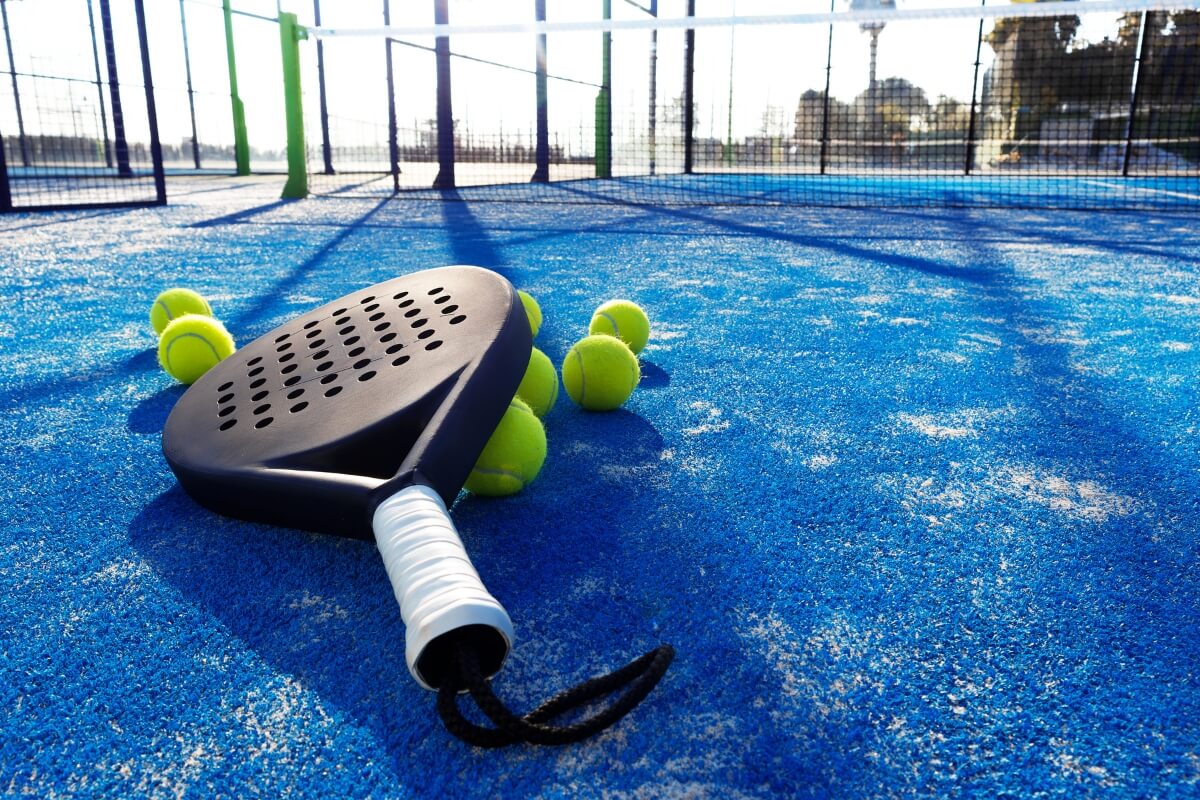
In the last decade, padel has become the most popular racket sport in Spain, with more than six million regular players, amateur tournaments every weekend, and courts open 24 hours a day. This popularity has had an inevitable effect: an increase in musculoskeletal ailments related to the sport.
A recent systematic analysis quantifies the overall injury rate at 3 per 1,000 training hours and 8 per 1,000 match hours, comparable to those in professional tennis, but with particular emphasis on the foot and ankle. Within this spectrum, the lower extremities bear the brunt of the load, accounting for 40% of all padel injuries.
At Podoks, we understand that protecting your feet isn't just a matter of performance: it's the difference between enjoying the game week after week or having to stop for months. Our biomechanical socks , specifically designed by podiatrists, are recommended for playing court sports such as padel tennis and tennis and are part of a comprehensive prevention strategy that we'll discuss in this article.
The mechanics of padel and the punishment to the foot
Anyone watching a game on television perceives speed, but until they step onto the court, they don't understand the true intensity of lateral accelerations, sudden stops, and short jumps dictated by strategy against the walls. Padel creates a perfect storm of stress factors for your feet:
Intense lateral accelerations
The court and walls require short, quick movements that increase the force of the ground reaction. Each contact generates highly localized plantar pressure peaks, especially in the forefoot. Intermediate amateur players can accumulate more than 8,000 lateral steps per hour, according to studies using court pedometers.
Synthetic abrasive surface
The material used to make padel courts offers less cushioning than a parquet court and increases friction. This surface significantly increases the risk of blisters and subungual hematomas, especially during prolonged playing sessions.
Repeated supports on the forefoot and midfoot
Explosive movements toward the net, spikes, and sudden changes of direction significantly increase plantar pressure. This combination produces repeated microtrauma, plantar fascia damage, and overload of the metatarsal heads.
Extended game durations
The addictive nature of padel tennis leads players to stay on the court much longer than initially planned. It's not uncommon for enthusiasts to play for several hours at a time, accumulating stress on foot structures that may already be fatigued.

The five most common foot injuries in padel
It's no surprise that most podiatric consultations for padel players focus on the foot-ankle area. Below, we analyze the five most common injuries, their underlying mechanisms, and specific strategies for preventing them based on current scientific evidence.
Plantar fasciitis
Plantar fasciitis —or fasciopathy—is the degenerative inflammation of the fibrous band that runs from the heel bone to the toes. This structure, known as the plantar fascia, acts as the natural "arch" of the foot and is essential for shock absorption during walking and running.
According to recent studies, plantar fasciopathy is the second leading cause of injury among padel players, behind only lateral epicondylitis.
Characteristic symptoms
The clinical presentation of this injury is very characteristic and allows for early recognition. The most distinctive symptom is the stabbing pain upon landing on the heel during the first steps in the morning, when the fascia is at its stiffest after hours of rest.
This pain typically improves during initial physical activity, as the structure warms up and gains flexibility, but tends to reappear after prolonged periods of rest or at the end of intense padel sessions.
Players also experience noticeable tenderness when applying direct pressure to the sole of the heel or arch, and many report greater discomfort after extended padel sessions than during the game itself.
In summary, the most characteristic symptoms of plantar fasciitis are:
- Sharp pain when placing the heel on the first steps in the morning.
- Pain that improves during activity but returns after rest.
- Tenderness when pressing on the sole of the heel or arch.
- Increased discomfort after extended padel sessions.
Why is this injury common?
Padel tennis creates a perfect environment for developing plantar fasciitis through several specific biomechanical mechanisms. Due to the high intensity of the movements and movements performed in padel tennis, such as lateral movements, acceleration, braking, jumping, and landing, along with the increased support placed on the forefoot during almost all of these movements, the plantar fascia is subjected to continuous mechanical stress.
Quick side-to-side movements stretch the plantar fascia laterally, while forward lunges and quick stops stress it longitudinally.
These multidirectional forces, combined with repetitive impact on hard track surfaces, gradually overload this crucial structure.
Risk factors in amateur players primarily include high game volume, the presence of extreme plantar arches—both excessively high and very low—and a high range of plantar flexion, which predisposes to greater fascial tension.
The medical literature is conclusive: it describes an up to sixfold increase in the likelihood of developing fasciitis when weekly mileage, including all on-track travel, exceeds 40 kilometers.
How to prevent plantar fasciitis in padel
Specific prevention should focus on maintaining posterior chain flexibility through daily stretching of the triceps surae and plantar fascia, especially after playing sessions.
Strengthening the intrinsic muscles of the foot—those small muscles we rarely consciously engage—is essential for maintaining natural arch support. Footwear should have a moderate drop of 10–12 mm and a firm midsole that provides stability without compromising cushioning.
On the other hand, technical socks that reduce vibration and provide targeted arch support, such as those developed by Podoks, are a first-line preventive tool backed by scientific evidence.
Gradually increasing playing time following the 10% rule allows the fascia to adapt to the demands of the sport without overtaxing itself. A comprehensive warm-up before the game, including specific foot and ankle mobility exercises, prepares the structure for the demands it will face.
In summary, the prevention strategies to avoid plantar fasciitis when playing padel are:
Daily stretches for the triceps surae and plantar fascia.
- Strengthening the intrinsic muscles of the foot.
- Footwear with moderate drop (10-12 mm) and firm midsole.
- Technical socks that reduce vibration and provide arch support.

Achilles tendinopathy and retrocalcaneal bursitis
The Achilles tendon is the most robust tendon in the human body and connects the gastrocnemius and soleus muscles to the calcaneus, enabling plantar flexion essential for propulsion during walking and running.
In padel, explosive starting and stopping movements subject this tendon to eccentric forces that can exceed eight times the player's body weight.
When these stresses accumulate without allowing sufficient time for tissue repair, the collagen that forms the tendon loses its orderly fibrillar organization, resulting in thickening, loss of elasticity, and, frequently, inflammation of the retrocalcaneal bursa that lies between the tendon and the bone.
Characteristic symptoms
The symptoms of Achilles tendinopathy develop progressively and follow a very recognizable pattern. Initially, pain and palpable thickening of the tendon appear, accompanied by morning stiffness that typically improves as the tendon warms up with movement.
During the most active phases of the game, players experience severe pain when pushing off with the toe, especially during jumps and accelerations. Lateral palpation of the tendon reveals marked tenderness, and in advanced cases, a popping sensation may be felt when moving the ankle.
The pain is most intense when we wake up in the morning or when we begin physical activity, and it decreases as we progress.
In summary, we can say that the main symptoms are:
- Pain and thickening of the tendon.
- Morning stiffness that improves with movement.
- Severe pain when pushing with the toe.
- Tenderness when squeezing the tendon from the sides.
Why is this injury common?
Achilles tendonitis is one of the most common injuries in padel, as it involves a series of characteristic movements that are constantly repeated at high intensity: jumping, accelerating, braking, turning, pushing off to hit, receiving after jumping, advancing toward the net, and moving backward.
The explosive nature of padel puts tremendous stress on the Achilles tendon, forcing it to absorb eccentric forces greater than eight times body weight.
Factors that predispose to this injury primarily include repeated eccentric overload, a characteristic of sports with frequent changes in pace, such as padel tennis. A sudden increase in playing volume, especially common at the start of the season or after periods of inactivity, represents one of the most important risk factors.
The use of footwear with a soft heel counter that does not provide adequate support to the rearfoot also contributes significantly. Advanced age reduces the capacity for tendon regeneration, while certain medications such as fluoroquinolone antibiotics can disrupt collagen synthesis.
How to prevent Achilles tendonitis in padel
Effective prevention requires a gradual progression of loads strictly following the 10% rule, avoiding sudden increases in intensity or volume of play.
Specific concentric-eccentric training, using controlled step-up and step-down exercises, strengthens the tendon and improves its ability to absorb forces.
Maintaining adequate flexibility in the calf muscles through regular stretching is essential, as tightness of the triceps surae significantly increases the tension on the tendon.
Podoks biomechanical socks incorporate targeted compression around the Achilles region, providing gentle support and promoting blood flow to this vulnerable area.
Footwear should have an appropriate heel-to-toe drop, avoiding sudden changes to minimalist shoes with zero drop, as this places additional stress on the Achilles. In cases of initial symptoms, the temporary use of heel lifts can reduce stress during the recovery phase.
In summary, the main recommendations to avoid Achilles tendonitis when playing padel include:
- Gradual progression of loads (10% rule)
- Specific concentric-eccentric work.
- Adequate calf flexibility.
- Temporary heel lift if necessary.

Ankle sprain
Inversion ankle sprain is the most common acute injury in padel, accounting for approximately 17% of all documented injuries in the sport.
This injury occurs when the foot suddenly and excessively rotates inward, exceeding the physiological range of motion of the joint.
The most common injury mechanism in padel occurs during the defensive gesture of rushing toward the wall to recover a low ball, a moment in which the player must make an extreme change of direction that can predispose to a sudden twist of the ankle.
Characteristic symptoms
The clinical presentation of the sprain is characteristic and allows for immediate diagnosis in most cases. Players experience sudden, intense pain on the outer side of the ankle, quickly followed by perimalleolar edema that develops within the first few minutes after the injury.
Weight-bearing capacity is compromised to varying degrees depending on the severity of the sprain, and bruising often occurs in the following hours due to the rupture of small blood vessels in the injured area.
Depending on the degree of intensity of the sudden inversion of the ankle, we can differentiate three types of sprain according to the involvement of the ligaments: from mild sprains (Grade I) with minimal stretching of the ligament to severe sprains (Grade III) that involve complete tears of the ligament and significant joint instability.
In summary, symptoms that help recognize a sprained ankle and differentiate it from other types of ailments include:
- Sudden pain on the outside of the ankle.
- Rapidly developing perimalleolar edema.
- Difficulty bearing weight.
- Possible bruising in the following hours.
Why this injury is common
The rapid changes in position and acceleration and deceleration movements typical of this sport can lead to poor foot support or a sudden turn that overstresses the ligaments that stabilize the ankle.
In this injury, the most frequently compromised ligament is the lateral collateral ligament. The quick, multidirectional movements required in padel create numerous opportunities for ankle sprains, especially when reaching for a wide shot or making a sudden change of direction that can inadvertently place the ankle in a vulnerable position.
Risk factors include a previous history of sprains, proprioceptive deficits, poor physical conditioning with lack of strength in the muscles that stabilize the ankle, poor foot function or poor gait, and reduced ankle mobility. This risk increases significantly on slippery surfaces, with inadequate footwear, or when fatigue affects coordination and balance.
How to prevent ankle sprains in padel
The importance of prevention in this injury has been widely documented by scientific research. Meta-analyses that have pooled data from more than 3,700 athletes conclusively demonstrate that specific proprioception and balance programs can reduce the incidence of sprains by up to 35%.
Particularly interesting is the finding that in women this protection appears to be even greater, possibly related to hormonal differences that affect the laxity of the external collateral ligament during certain phases of the menstrual cycle.
Effective prevention should be based on adequate physical preparation that incorporates exercises focused on ankle proprioception or sensorimotor training, in addition to increasing strength in the muscles that stabilize the ankle (the muscles of the foot and leg) as well as in the structures that stabilize the body in general, such as the core.
The use of specific padel footwear, appropriate for the surface on which you typically play, is essential. Podoks biomechanical socks feature proprioceptive signals and targeted support around the ankle area, improving foot position awareness during play and providing soft stability.
To prevent ankle sprains when playing padel, keep the following factors in mind:
- 4-6 weeks of balance and proprioception training.
- Strengthening of peroneal and stabilizing muscles.
- Specific footwear with good lateral support.
- Proper technique when moving.

Metatarsalgia and stress fractures
Metatarsalgia encompasses a group of painful symptoms that affect the anterior region of the foot, specifically the area where the metatarsal bones articulate with the proximal phalanges of the toes.
This condition develops when pressure is repeatedly and excessively concentrated on the heads of the second and third metatarsals, structures that are not anatomically designed to withstand such intense loads continuously.
In padel, the repeated jumps, explosive spikes, and sudden stops that concentrate body weight on the forefoot create the perfect conditions for the development of this condition.
What are the symptoms of metatarsalgia?
The symptoms of metatarsalgia are characterized by diffuse pain in the front of the sole of the foot that intensifies noticeably after performing jumps or smashes , precisely the technical movements that generate the greatest overload in this anatomical region.
Players who suffer from it often describe a sensation of "walking on stones" or having an uneven surface under the ball of their foot, especially when walking barefoot on hard surfaces. The pain tends to increase progressively during playing sessions and can persist for several hours after the activity ends.
When metatarsalgia progresses to stress fractures, more specific symptoms appear: localized pain that persists even at rest, extreme tenderness when pressing directly on the affected bone, and pain that progressively intensifies over the days instead of improving with rest.
Why metatarsalgia is common in padel
The forefoot absorbs tremendous forces during padel, particularly during the quick forward lunges and pushes that characterize the sport.
When you explosively move forward to hit a drop shot or push off to return to center position, the metatarsal heads bear the brunt of these forces.
Players with certain foot types are at greater risk, including those with high arches that concentrate pressure on a smaller forefoot area, or those with longer second metatarsals.
Factors that predispose to these injuries include primarily supinated foot patterns, which excessively concentrate forces on the outer edge of the foot, overuse associated with sudden increases in training volume or intensity, and the use of footwear that is excessively compressed in the toe area, which alters the natural biomechanics of the forefoot.
How to prevent metatarsalgia in padel
Effective prevention should focus on redistributing plantar pressure through the use of specific insoles with metatarsal relief that allow for more even body weight distribution. Socks with selective padding and pressure redistribution technology, such as those developed by Podoks in our specific model for metatarsalgia , have been scientifically proven to reduce pressure peaks in the areas of greatest stress.
Gradual progression of playing volume following systematic training principles is essential, applying the 10% rule to avoid sudden increases that exceed the bone tissue's ability to adapt.
Targeted strengthening of the intrinsic muscles of the foot through exercises such as resisted toe curls, picking up small objects with the toes, and short arch exercises complete the comprehensive preventative approach.
The shoe should provide sufficient width in the toe box to prevent excessive compression of the forefoot.

Blisters, hyperkeratosis and black nails
Dermatological lesions of the foot, although frequently underestimated, can also be limiting for padel practice and, in some cases, predispose to secondary infections that significantly complicate the clinical picture.
Blisters form as a direct result of mechanical friction between the moist skin of the foot and the inner surface of the shoe, especially the abrasive midsole that characterizes many padel shoes.
This process is enhanced by the high temperatures reached inside the footwear during intense gaming sessions and by the humidity generated by sweating.
Recognizing the symptoms
Blisters initially appear as areas of redness and tenderness that develop into fluid-filled blisters, typically in areas of high friction, such as the heel, sides of the foot, and the sole of the foot.
Subungual hematomas, popularly known as "black nails," are recognized by the characteristic dark color under the nail plate, often accompanied by throbbing pain that can persist for weeks.
Hyperkeratosis presents as areas of thickened, hardened skin, initially yellowish and then painful when it thickens excessively. These lesions often develop at specific pressure points, such as the metatarsal heads, or in areas subject to repeated friction against seams or irregularities in footwear.
Why these ailments are common in padel
Padel tennis creates particularly favorable conditions for these dermatological injuries due to several factors. The synthetic surface of padel courts significantly increases the risk of friction, while the intensity of the game generates high temperatures inside the shoes and profuse sweating, which keeps the skin moist and more susceptible to mechanical damage.
Subungual hematomas occur specifically when the toenail repeatedly impacts the toe of the shoe during the sudden braking characteristic of padel tennis. This impact ruptures the capillaries beneath the nail plate, causing blood to accumulate and causing pain and discoloration.
Explosive movements toward the net, sudden stops, and abrupt changes of direction significantly increase the likelihood of these repeated impacts.
Prevention strategies
The scientific evidence in this field is particularly strong. A critical review published in the prestigious Journal of the American Podiatric Medical Association conclusively established that socks made with dense acrylic fibers significantly reduce the incidence of blisters compared to traditional thin cotton socks.
This finding is explained by the superior moisture management properties of synthetic fibers and their lower coefficient of friction.
Effective prevention requires a multifactorial approach that includes systematically changing socks during each playing session and avoiding the reuse of wet socks, which exponentially increases the risk of friction.
Choosing the right sock for padel shouldn't be left to chance, as it's the first barrier of protection between your foot and the specific demands of this sport.
The selection of synthetic fibers with moisture-wicking capabilities, the specific anatomical design for the right and left foot that eliminates wrinkles and creases, and the incorporation of flat seams that minimize friction points are the fundamental elements of an effective preventive strategy.
Proper shoe fit, avoiding both excessive looseness and excessive compression, is equally crucial to minimizing the relative movement between the foot and the shoe that generates harmful friction.
Some recommendations when choosing padel socks to prevent these problems include:
- Change your socks after each session.
- Use socks made of synthetic fabrics that wick away moisture (at Podoks, we use Coolmax fabric, which also has an antibacterial treatment that prevents blisters and also prevents fungal infections).
- No internal seams to minimize friction.
- Anatomical mapping (differentiated right/left foot).

Evidence-based prevention: the three pillars
Effective injury prevention in padel tennis is based on three fundamental pillars that, when working together, offer the maximum possible protection. These pillars have been validated by both scientific research and the clinical experience of professionals specializing in sports medicine.
1. Prepare the foot
A warm-up that combines joint mobility and progressive sprints increases muscle temperature and reduces fascial stiffness. Post-match calf and plantar fascia stretches help restore mechanical length lost during intense stances.
Recommended protocol:
- 5 minutes of joint mobility.
- 10 minutes of specific padel movements.
- Post-game stretches focused on the posterior chain.
2. Control the load
Sudden increases in weekly matches increase the likelihood of fasciopathy and bone stress. The 10% principle (not adding more than 10% of time or intensity per week) remains the golden rule for avoiding overuse injuries.
Progression plan:
- Week 1-2: Sessions of 45 minutes maximum.
- Week 3-4: Increase to 60 minutes.
- Week 5+: Add second day of practice.
3. Optimize the shoe-foot interface
This is where running shoes (with a herringbone sole, a 10 mm drop, and a good heel counter) come into play, as well as custom insoles in cases of leg length discrepancies or excessive pronation, and, with increasing scientific attention, technical socks.
The importance of socks in padel
For years, podiatrists focused exclusively on shoes as a key element in injury prevention. However, advances in materials and a deeper understanding of foot biomechanics have placed the sock as a true protagonist in prevention.
A study using FootScan sensors showed that a U-shaped cushioning midsole integrated into the fabric can significantly reduce plantar pressure on the forefoot.
Three scientifically documented mechanisms
1. Moisture and friction management
Synthetic fibers like CoolMax® wick sweat away, keeping skin dry and reducing friction, which in turn significantly reduces the incidence of blisters.
2. Selective damping and pressure distribution
Localized padding acts as a dynamic insole that redistributes the load during impact, providing crucial relief in cases of metatarsalgia.
3. Improved proprioception
Several controlled trials show that the gentle compression of an anatomical sock amplifies cutaneous sensory signals, promoting joint control, even after prolonged activity.
What science says about Podoks socks
Translating scientific evidence into real-world products requires a deep understanding of both biomechanics and advanced materials. Podoks socks have been designed by podiatrists with over 30 years of clinical experience, combining the latest research findings with the real needs of athletes.
Its technical characteristics include:
- CoolMax® fabric with antibacterial yarn that keeps the foot below 30°C.
- First finger separation that maximizes the leverage of the Windlass mechanism.
- Cushioning zones in the heel and forefoot absorb impact and redistribute pressure.
- Compression band on the arch that provides proprioceptive stimulation and stability.
Internal pressure platform testing revealed a 25% reduction in load under the first metatarsal head. The result isn't just comfort: it also reduces the risk of plantar fasciitis, metatarsalgia, and blisters.
In addition, the compression band on the arch provides a slight proprioceptive stimulus that, according to scientific literature on elastic stockings, can improve the reaction time of the peroneal muscles and limit minor sprains.
All this without sacrificing ergonomics: the design prevents the sock from slipping inside the shoe during an explosive outing toward the net or the walls of the padel court. Therefore, Podoks socks are recommended for playing court sports such as padel, tennis, or pickleball.
Which Podoks sock to choose for padel practice?
Choosing the right sock for padel shouldn't be left to chance, as it's the first barrier of protection between your foot and the specific demands of this sport.
For most padel players, especially those without any pre-existing conditions, the best choice is the Podoks Running Alto . It offers high breathability and cushioning, and its high cut is especially valuable for players with a history of ankle sprains or those seeking specific prevention in this vulnerable area. If you don't feel comfortable wearing a high-cut sock, we recommend the Podoks Running PRO .
If you prioritize comfort above all else, or if you are just starting out in padel and/or your feet are not sufficiently adapted to a sport that requires sudden changes in movement and direction such as padel, our recommendation is the Podoks Confort sock .
Both the Running range for sports use and the Comfort range are indicated to prevent plantar fasciitis. If you suffer or have suffered from metatarsalgia or are prone to discomfort in the forefoot area (the front part of the sole of the foot), we recommend using the Podoks Metatarsalgia Sock.
All Podoks models are made with high-density CoolMax® fabric, which provides superior moisture wicking, keeping your feet dry even during the most intense sessions.
Highlights of each model
Podoks Running PRO:
- Maximum performance for demanding gamers.
- Advanced CoolMax® technology.
- Specific biomechanical support for plantar fasciitis.
- Ideal for competition and intense training.
Podoks Running Alto:
Same features as the Podoks Running PRO, plus:
- Greater ankle protection thanks to its high shaft.
- Ideal for players with a history of ankle injuries.
Podoks Comfort:
- Specific biomechanical support for plantar fasciitis.
- Comfort without giving up technology.
- Ideal for recreational players.
Podoks Metatarsalgia:
- Specific sock for the treatment and prevention of metatarsalgia.

Strategies to prevent injuries in padel
Once the most common injuries and their underlying mechanisms are understood, it is essential to implement a comprehensive approach that combines physical preparation, professional examinations, and optimized equipment. Effective prevention in padel is not based on isolated measures, but rather on the synergy between all these elements.
Specific physical preparation program
Physical preparation is the cornerstone of any serious preventive strategy. A progressive warm-up should include five minutes of joint mobility followed by ten minutes of padel-specific movements that replicate the movements you'll perform during the match. This progression allows the tissues to reach optimal temperature and improves the viscosity of the synovial fluid.
The strength plan should focus especially on the triceps surae, peroneal muscles, and plantar flexors, as these are the muscle groups that work the most during the characteristic movements of padel.
Specific padel footwear should incorporate a herringbone sole to optimize traction, a lateral stabilizer to prevent ankle inversions, and a 10-12 mm drop.
Proprioceptive training, performed two or three days a week, includes Bosu exercises, single-leg jumps, and balance exercises that significantly improve neuromuscular response to unexpected situations.
Active recovery using foam rolling and post-match myofascial stretching is equally crucial, as it helps restore optimal tissue length and reduces tension accumulated during the game.
Professional review
Regular professional evaluations can detect problems before they become injuries. Your annual podiatric examination should include a complete biomechanical analysis that assesses gait patterns, possible foot length discrepancies, and the need for custom insoles.
This evaluation is especially important for players who have suffered previous injuries or who have known risk factors.
Evaluating footwear every 300-500 hours of play is critical, as the loss of cushioning and support can significantly increase injury risk. Many players are unaware of the gradual deterioration of their shoes and continue to wear them well beyond their useful life.
A qualified professional's analysis of playing technique can identify movement patterns that predispose to injury, allowing for corrections that not only improve performance but also reduce stress on vulnerable structures.
Adequate equipment
Selecting the right equipment represents the direct interface between the body and the demands of the sport. Specific padel footwear should incorporate a herringbone sole to optimize traction, a lateral stabilizer to prevent ankle inversions, and a 10-12 mm drop to maintain a physiological foot position during dynamic movements.
Technical socks with advanced moisture management and selective cushioning have been scientifically proven to reduce plantar pressure and improve proprioceptive control.
Custom insoles, when prescribed by a professional, can correct specific biomechanical abnormalities that would otherwise predispose to overuse injuries.
When to seek professional attention
Although prevention strategies significantly reduce the risk of injury, recognizing when professional intervention is needed remains crucial. If you experience any foot pain related to padel tennis, you should consult a professional, either a physical therapist or a podiatrist, if you experience any of the following:
- Pain that persists for more than 48-72 hours after rest.
- Inability to bear weight on the affected foot.
- Visible deformity, severe swelling, or extensive bruising.
- Pain that wakes you from sleep or remains intense at rest.
- Any audible noise when moving or planting the foot accompanied by immediate pain and dysfunction.
Healthcare providers may recommend specialized physical therapy, custom orthotics, appropriate activity modifications, or advanced techniques such as shock waves for chronic conditions.
Conclusion
Padel is an explosive, addictive sport that, if left untreated, can be potentially harmful to your feet.
The good news is that most serious ailments originate from chronic overload and repeated friction: factors that we can modulate and control.
A strength and proprioception program, intelligent match progression, and proper footwear are essential; but technical socks prove to be the first barrier to reducing pressure, temperature, and micro-slipping.
When that barrier is designed with biomechanical criteria—as is the case at Podoks—the benefits are amplified: less fasciitis, less metatarsalgia, fewer blisters, and, above all, more time on the court without pain. Keep in mind that at Podoks, we don't design socks to look good with your shoes; we design them to prevent injuries and doctor visits.
Foot health isn't a luxury for padel players: it's the literal foundation on which your game is built. If you want your feet to last as many matches as your enthusiasm, perhaps it's time to give your socks the attention they deserve.
-----
Scientific references:
García-Bol, P., Blanco-García, C., Puentes-Gutiérrez, AB, & Camacho-Rodríguez, A. (2023). Incidence, prevalence and nature of injuries in padel: a systematic review. Sports Medicine and Health Science, 5(1), 153-159.
Muñoz-Alcaraz, MN, Pradas de la Fuente, F., González-Jurado, J.A., & Jiménez-Reyes, P. (2020). Injury epidemiology in professional and non-professional Spanish padel players. International Journal of Medicine and Sciences of Physical Activity and Sport, 20(77), 79-93.
Wearing, T.I., et al. (2021). Risk factors for plantar fasciitis in physically active individuals: a systematic review. Sports Medicine, 51(6), 1333-1345.
Herring, K.M., et al. (2022). Friction blisters of the feet: a critical assessment of current prevention strategies. Journal of the American Podiatric Medical Association, 112(4), 1-12.
Sáez-Gaiteiro, C., et al. (2021). Socks with a U-shaped 3D element reduces plantar pressure during running. The Foot, 47, 101782.
McKeon, P.O., Hertel, J., Bramble, D., & Davis, I. (2015). The foot core system: a new paradigm for understanding intrinsic foot muscle function. British Journal of Sports Medicine, 49(5), 290-299.



Leave a comment
All comments are moderated before being published.
This site is protected by hCaptcha and the hCaptcha Privacy Policy and Terms of Service apply.