
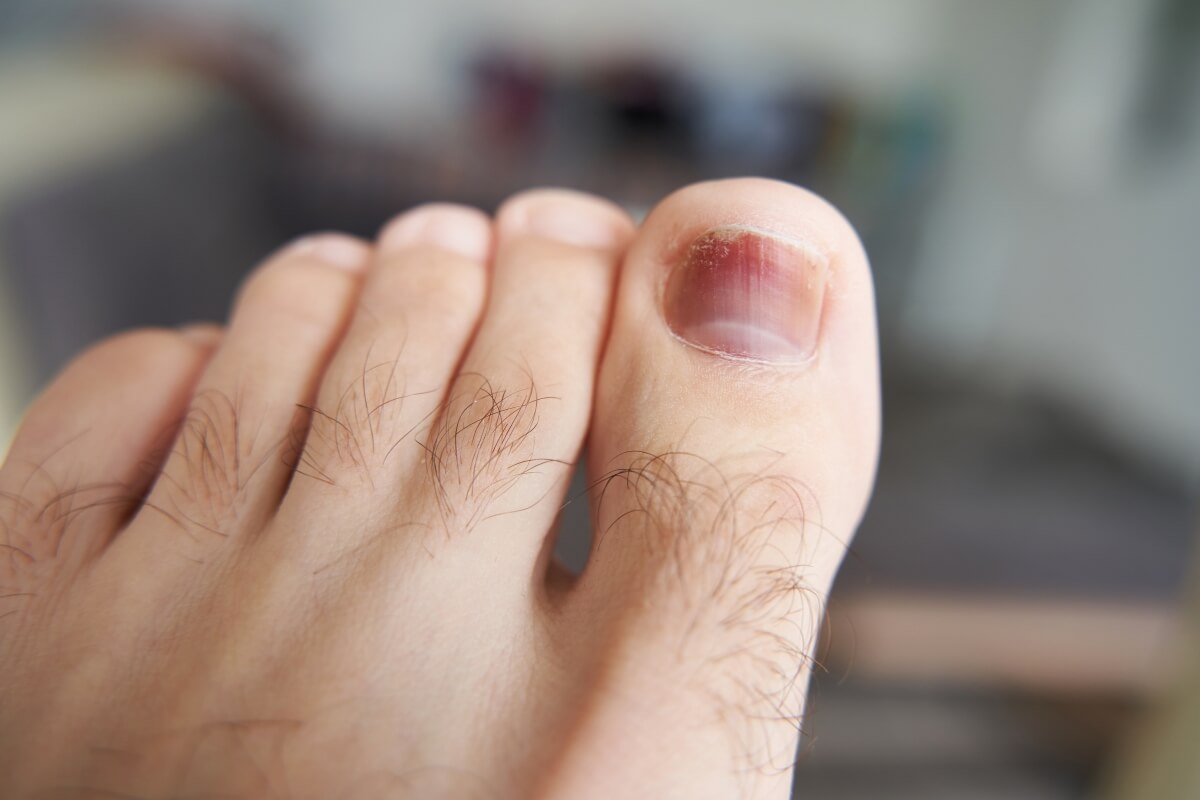
Black toenails are one of the most characteristic and common injuries among athletes, especially those who engage in high-impact activities such as running, soccer, basketball, or hiking.
Although many consider them a "badge of honor" that demonstrates dedication to training, the reality is that they represent an injury that requires specific attention and care and are in no way a cause for celebration or a sign of athleticism.
This condition, known medically as a subungual hematoma, primarily affects the big toes, although it can occur on any toe. Its characteristic dark color, ranging from a reddish hue to pitch black, is the result of blood accumulating under the nail plate due to repetitive trauma or direct impact.
For athletes, understanding the causes, prevention mechanisms, and treatment options for black toenails is essential to maintaining foot health and continuing their sports activities without complications.
What exactly are black nails?
Black nails in sports are subungual hematomas caused by the rupture of small blood vessels located under the nail plate. When these capillaries rupture, blood accumulates in the space between the nail and the nail bed, creating the characteristic dark color that ranges from reddish or purple to black.
This process doesn't happen instantly. Initially, the nail may show slight redness, which many athletes overlook.
Over time and with continued microtrauma, the coloration intensifies until it reaches the characteristic black tone that gives this condition its name.
It's important to distinguish black athletic nails from other conditions that can cause nail discoloration, such as fungal infections , subungual melanomas, or pigmentation disorders. A history of athletic activity and the presence of trauma are key to a correct diagnosis.

Main causes in the sports field
Black toenails in athletes don't occur by chance; they are the result of specific factors related to sports practice. Understanding these causes is essential for developing effective, personalized prevention strategies based on the type of physical activity performed.
Inappropriate sports shoes
The most common cause of black toenails in athletes is related to wearing inappropriate footwear. Shoes that are too small compress the toes against the toe box, creating constant pressure that can damage the tissues beneath the toenail. Conversely, shoes that are too large allow the foot to shift within the shoe, increasing friction and impact.
Preventing black toenails starts with choosing the right athletic footwear.
The shape of the toe box also plays a crucial role. Shoes with toe boxes that are too narrow concentrate pressure on specific areas, while those with inadequately wide toe boxes don't provide the support necessary to control foot movement during sports activities.
The material and construction of footwear also influence the appearance of black toenails. Shoes with rigid materials or internal seams can create specific pressure points that contribute to the development of subungual hematomas.
Sports technique and biomechanics
The way an athlete performs the specific movements of their discipline can predispose them to the appearance of black nails.
In running, for example, a running technique that involves excessively aggressive ground contact or an inadequate take-off phase can increase impact forces on the toes.
Runners who tend to "brake" with their foot, landing with their heel far forward of their center of gravity, often experience increased forward slippage within the shoe. This repetitive motion can cause ongoing trauma to the toes and, consequently, to the nails.
Surface and training conditions
The type of surface on which the sport is practiced significantly influences the incidence of black toenails. Very hard surfaces, such as asphalt or concrete, generate greater impact, which is transmitted through the musculoskeletal system to the toes.
In mountain sports or trail running, steep downward slopes are especially problematic. During long descents, the foot tends to slide forward in the shoe due to gravity, increasing pressure on the toes and nails.
70% of black toenails can be prevented with proper footwear and proper training techniques.
Weather conditions also have an impact. Excessive heat can cause foot swelling, reducing the available space inside the shoe. Humidity, whether from excessive sweating or environmental conditions, can alter the friction properties between the foot and the inside of the shoe.
Individual anatomical characteristics
Certain anatomical characteristics predispose some athletes to developing black toenails more frequently. Long toes, especially when the second toe is longer than the first (Greek foot), are more exposed to trauma inside athletic shoes.
Digital deformities such as hammertoes, club toes, or hallux rigidus alter the normal biomechanics of the foot and can create abnormal pressure points that promote the development of subungual hematomas.
Very high or very low arches can also influence pressure distribution during sports activities, indirectly affecting nail health.

Higher risk sports
Although black toenails can occur during any sporting activity, certain sports have a significantly higher incidence due to their specific characteristics. Understanding these risk factors allows athletes to take more targeted and effective preventive measures.
Running and athletics
Runners are the sports group with the highest incidence of black toenails. The repetitive nature of running, combined with high impact forces and long distances, creates perfect conditions for the development of subungual hematomas.
Marathon and ultramarathon runners face a particularly high risk due to the prolonged duration of the activity. During a run lasting several hours, feet can swell considerably, reducing the space inside shoes and increasing pressure on the toenails.
Sprinters and middle-distance athletes can also develop black nails, although through slightly different mechanisms. In these disciplines, explosive accelerations and sudden changes in pace subject the fingers to intense shearing forces.
The way you tie your shoes has a significant impact on preventing black toenails.
Field and track sports
Soccer, basketball, tennis, and other sports that require frequent changes of direction pose a significant risk of black toenails. In these sports, lateral movements and sudden stops can cause the foot to shift inside the shoe, creating frictional forces on the toes.
Soccer has unique characteristics due to the use of cleats and the frequency of direct contact with the ball. Soccer players often develop black toenails on specific toes that receive the greatest impact when kicking the ball.
Mountain sports
Hiking, mountaineering, and trail running present unique challenges for nail health. Prolonged descents over steep terrain subject the toes to constant forward pressure, while ascents can create stress on the back of the foot.
The extended duration of these activities, often lasting several hours or even days, exponentially increases exposure to microtrauma. Furthermore, the changing terrain conditions require constant adaptations that can overload certain areas of the foot.
It can take 9 to 12 months for your big toenail to fully regenerate.
Identification and differential diagnosis
Correctly identifying athletic black toenails is crucial for applying the appropriate treatment and ruling out other conditions that may present similar symptoms. An accurate diagnosis allows for the implementation of the most appropriate therapeutic measures and avoids unnecessary complications.
Characteristic signs and symptoms
Correctly identifying a black jockstrap begins with recognizing its characteristic signs. The most obvious symptom is a change in the nail's color, which progresses from reddish or purple tones in the early stages to deep black in advanced cases.
Pain is another important indicator, although its intensity varies considerably. In some cases, especially when the hematoma is small, the athlete may not experience significant discomfort.
However, when the accumulation of blood is considerable, the pain may be intense and throbbing due to the pressure exerted on the underlying nerves.
Tenderness to touch and pressure is characteristic of fresh subungual hematomas. The athlete may experience discomfort when wearing closed-toe shoes or performing activities that place pressure on the affected toes.
Differentiation from other pathologies
It's crucial to distinguish black sports nails from other conditions that can cause nail discoloration. Fungal infections , for example, can cause changes in nail color, but they often have distinctive characteristics such as thickening, uneven texture, and a distinctive odor.
Subungual melanoma, although rare, is a serious condition that can present as a dark longitudinal band on the nail. This condition requires immediate medical evaluation and is not related to sports injuries.
Melanonychia, or natural pigmentation changes, can be mistaken for traumatic black nails, especially in dark-skinned people.
The absence of a history of trauma and the presence of symmetrical longitudinal bands are indicators of this benign condition.

Comprehensive prevention for athletes
Preventing black toenails requires a multifaceted approach that addresses all identified risk factors. A comprehensive preventive strategy not only reduces the incidence of this injury but also improves overall athletic performance and comfort during physical activity.
Selecting and fitting athletic footwear
Preventing black toenails starts with choosing the right athletic shoes. Athletes should look for shoes that provide enough room for the toes, especially in the toe box.
A rule of thumb is to ensure a space of approximately one centimeter between the longest toe and the toe box of the shoe.
The timing of your shoe purchase is important. It's recommended to try on shoes in the afternoon or after training, when your feet are slightly swollen, simulating real-life sports conditions.
The shape of the toe box should be adapted to the individual shape of the foot. Athletes with long toes benefit from wider toe boxes, while those with wider feet require shoes with more volume in the forefoot.
Biomechanical socks can reduce stress on nails during intense sports activity.
Tying and adjusting techniques
The way you lace your shoes plays a significant role in preventing black toenails. Lacing techniques that secure the heel and prevent the foot from sliding forward are essential for reducing toe trauma.
The "hourglass" lacing, which provides greater support on the instep while maintaining flexibility in the toe area, is particularly effective for athletes prone to developing black toenails.
It's important to avoid lacing your shoes too tightly, as this can restrict circulation and increase pressure on your toenails. The fit should be firm but comfortable, allowing for small, natural movements of the foot.
Nail care and maintenance
Proper nail care is essential to prevent trauma. Nails should be kept trimmed to an appropriate length: neither too short (which can predispose to ingrown toenails) nor too long (which increases the risk of trauma).
The cut should be made straight, avoiding rounded shapes that can create edges that snag or put pressure on adjacent tissue. It is recommended to use specific toenail clippers and gently file the edges after cutting.
Regular foot and nail hygiene helps maintain overall foot health and allows for early detection of any changes. Applying specific foot moisturizers can maintain the flexibility of the skin and nails.
Technical socks and their preventive role
Choosing the right socks is an often overlooked aspect of preventing black toenails. Technical socks made with moisture-wicking materials help keep feet dry, reducing friction and the risk of slipping inside shoes.
Socks that are too thick can affect the fit of your shoes, while those that are too thin don't provide sufficient protection. The ideal thickness depends on the type of sport and the individual characteristics of your foot.
Biomechanical socks, such as those developed by Podoks, offer additional benefits by providing targeted support in critical areas of the foot. Their scientific design can help optimize pressure distribution during sports activities, reducing stress on the nails and helping to prevent subungual hematomas.
Progressive adaptation to training
Gradual progression in training intensity and volume allows the foot tissues to progressively adapt to sports stress. Sudden increases in training load can exceed the ability of the nail structures to adapt.
For athletes returning to activity after a period of inactivity, it is especially important to implement a careful progression that allows for the re-adaptation of all foot tissues, including the structures under the nails.
Varying training methods can also be beneficial. Alternating between different surfaces, intensities, and types of exercise can reduce repetitive stress on specific areas of the foot.

Immediate response and conservative treatment
When a black toenail develops despite preventive measures, immediate response and proper management can determine the progression of the injury and recovery time. Early and appropriate intervention minimizes complications and accelerates the return to sports activities.
Initial evaluation
When an athlete develops a black toenail, the initial evaluation should include assessment of pain, hematoma size, and nail integrity. In cases where pain is minimal and the hematoma is small, conservative management with observation may be recommended.
It is important to document the progression of the injury through photographs or detailed descriptions, as this will help determine whether the condition improves or requires professional intervention.
The evaluation should also include the identification of possible modifiable causal factors, such as problems with footwear or sports technique, to prevent recurrences.
Symptomatic relief measures
For pain management associated with black toenails, applying cold immediately after detecting the injury can help reduce inflammation and pain. Cryotherapy should be applied intermittently to prevent cold damage.
Over-the-counter pain relievers can provide temporary pain relief, especially in the first 48-72 hours after the injury. However, it's important not to mask symptoms that could indicate the need for professional treatment.
Elevating the affected foot when possible can help reduce vascular congestion and relieve pressure on the bruised area.
Modification of sports activity
Depending on the severity of symptoms, it may be necessary to temporarily modify sports activities. In mild cases, reducing the intensity or duration of training may be enough to allow healing.
For athletes experiencing significant pain, a temporary pause in activity may be necessary until symptoms improve. This decision should be based on the severity of the pain and the athlete's ability to perform the activity without compensating for it, which could lead to further injuries.
During the activity modification period, alternative exercises can be implemented to maintain physical fitness without aggravating the nail injury.
Specialized professional treatment
Although many black toenails can be managed conservatively, there are situations that require specialized professional intervention. Recognizing when to seek professional help and understanding the available treatment options is essential to optimizing outcomes and preventing complications.
When to seek podiatric care
It's essential to consult a podiatrist when the pain associated with a black toenail is severe and persistent, especially if it interferes with daily or athletic activities. Intense throbbing pain may indicate significant pressure under the nail that requires professional drainage.
Signs of infection, such as excessive redness around the nail, localized warmth, pus-like discharge, or fever, require immediate medical attention. These symptoms may indicate that the injury has progressed beyond a simple bruise.
If the nail shows signs of complete or partial detachment, professional evaluation is essential to determine the best course of action and prevent complications.
Drainage procedures
Draining a subungual hematoma is a relatively simple procedure but should be performed by trained professionals. The goal is to relieve the pressure built up under the nail to relieve pain and prevent complications.
The procedure typically involves creating a small hole in the nail plate using sterile instruments. This hole allows accumulated blood to drain, immediately relieving pressure and associated pain.
Drainage is most effective when performed within the first 48-72 hours after the injury, while the blood is still liquid. After this period, the blood can clot, making the procedure less effective.
Risks and complications
In cases where the hematoma has caused the nail to become detached, the podiatrist may need to remove the detached portion to prevent infection and facilitate healing. This procedure is generally painless since the detached nail is not attached to the nail bed.
When there is a risk of infection or an infection is already present, the use of topical or systemic antibiotics may be necessary. Proper management of the infection is crucial to prevent more serious complications.
In some cases, especially when the nail bed has suffered significant damage, it may be beneficial to implement nail reconstruction techniques using artificial materials to protect the area while the natural nail regenerates.

Healing and regeneration process
Healing a black toenail is a complex process that requires time and specific care. Understanding the different stages of this process and the factors that influence recovery helps athletes have realistic expectations and make informed decisions about their return to sports.
Phases of healing
Healing a black nail is a gradual process that can take several months. Initially, during the first few weeks, the pain and sensitivity gradually decrease. During this phase, it is important to keep the nail protected and avoid further trauma.
As healing progresses, the new nail begins to grow from the nail matrix. This process is slow, especially for toenails, which grow approximately 1-2 millimeters per month. The big toenail can take 9-12 months to fully regenerate.
During the regeneration process, it's common to observe changes in the texture and appearance of the new nail. These changes are usually temporary and improve as the nail continues to grow.
Factors influencing recovery
The athlete's age significantly influences the speed of healing. Younger athletes tend to experience faster regeneration due to increased metabolic activity and better circulation.
Nutritional status also affects healing. A diet rich in protein, vitamins, and minerals, especially biotin, zinc, and iron, promotes healthy nail growth.
Proper care during the healing process is essential. Keeping the area clean and protected, avoiding further trauma, and following your podiatrist's recommendations optimizes results.
Return to sports activities
Returning to full sports activity should be gradual and based on the absence of pain and stability of the nail. It is important not to rush this process, as premature activity can cause recurrences or complications.
During the first few weeks after treatment, it may be beneficial to use additional protection such as silicone finger cots or special dressings that reduce pressure on the healing nail.
Evaluation and modification of athletic footwear before returning to full activity is essential to prevent recurrences. This may include switching to better-fitting shoes or implementing modified lacing techniques.
Prevention of recurrences
For athletes who have experienced black toenails, preventing recurrence becomes a key priority. This requires a more sophisticated approach that may include biomechanical analysis, equipment modifications, and changes in athletic technique to address the underlying causes that led to the initial injury.
Biomechanical analysis
For athletes who experience recurrent black toenails, a complete biomechanical analysis can identify modifiable predisposing factors. This study may reveal abnormal movement patterns, uneven pressure distribution, or problems with athletic technique.
Footprint analysis during specific sports activities provides valuable information about the forces acting on the toes and nails. This information can guide targeted interventions to reduce the risk of recurrence.
Use of plantar supports
In cases where biomechanical analysis reveals alterations in pressure distribution or structural problems in the foot, the use of custom insoles may be beneficial. These devices can optimize foot biomechanics and reduce the forces that predispose to black toenails.
Sports-specific insoles are designed to withstand the demands of high-impact activities while providing biomechanical correction. Their use should be gradual to allow for the foot's adaptation.
Education and follow-up
Educating athletes about risk factors, prevention techniques, and warning signs is essential to prevent recurrences. This includes information on footwear selection, nail care, and technique modifications.
Regular follow-up with a sports podiatrist allows for early detection of potential problems and adjustment of preventive strategies as needed.

Special considerations for different sports
Each sport presents unique challenges in terms of preventing and managing black toenails. Preventive strategies must be tailored to the specific demands of each sport, considering factors such as the type of movement, duration of the activity, playing surfaces, and equipment specific to each discipline to maximize their effectiveness.
Adaptations for runners
Long-distance runners face unique challenges due to the prolonged duration of their activity. For these athletes, footwear selection must consider not only the initial fit but also how the foot will behave after several hours of activity.
Hydration and electrolyte strategies can influence foot swelling during long runs, affecting shoe fit. Experienced runners often adjust their lacing strategy or even change socks during very long runs.
Considerations for field sports
In sports such as soccer or basketball, where changes of direction are frequent, emphasis should be placed on a secure heel fit to minimize the foot from slipping inside the shoe.
The contact nature of some of these sports also requires consideration of additional protection that can reduce the risk of direct trauma to the fingers.
Mountain and adventure sports
For activities such as long-distance hiking or mountaineering, where access to medical care may be limited, prevention is especially critical. This includes carrying specific first aid supplies for foot care.
The variability of terrain in these sports requires versatile footwear that provides protection in a variety of conditions, from sharp rocks to slippery surfaces.
Conclusions
Black toenails in athletes represent a common but preventable injury that can significantly impact performance and comfort during physical activity. Understanding its causes, prevention mechanisms, and treatment options is essential for any serious athlete.
Prevention remains the most effective strategy, focusing on appropriate footwear selection, proper nail care, and sensible training progression. Advances in sports technology, including the development of specialized biomechanical socks , offer new opportunities to optimize foot health.
When black toenails develop despite preventive measures, prompt professional treatment can minimize complications and speed the return to sports activities. Collaboration between athletes, coaches, and podiatric health professionals is essential to achieve the best results.
It's important to remember that every athlete is unique, and prevention and treatment strategies should be tailored to individual characteristics, the type of sport practiced, and specific performance goals. Investing in professional podiatric care not only prevents injuries but can significantly contribute to longevity and success in an athletic career.
Continuing education on these topics, for both athletes and sports professionals, is essential to reducing the incidence of black toenails and improving overall foot health in the athletic population.
-----
Scientific references:
Reynolds, J.C., et al. (2012). Subungual hematoma in athletes: diagnosis and management. Sports Medicine, 42(8), 687-695.
Menz, H.B., & Morris, M.E. (2005). Footwear characteristics and foot problems in older people. Gerontology, 51(5), 346-351.
Van Gent, R.N., et al. (2007). Incidence and determinants of lower extremity running injuries in long distance runners: a systematic review. British Journal of Sports Medicine, 41(8), 469-480.
Singh, D., & Bentley, G. (1995). Subungual hematoma of the great toe. Injury, 26(6), 427-428.
García-Pérez, MA, et al. (2018). Prevalence of foot problems in recreational runners: a cross-sectional study. Journal of Sports Medicine and Physical Fitness, 58(9), 1295-1302.
Taunton, J.E., et al. (2002). A retrospective case-control analysis of 2002 running injuries. British Journal of Sports Medicine, 36(2), 95-101.




Leave a comment
All comments are moderated before being published.
This site is protected by hCaptcha and the hCaptcha Privacy Policy and Terms of Service apply.